Gutrack
Quick Answer for Gastritis: A gastritis-friendly diet prioritizes non-acidic, soft, easily digestible foods such as oatmeal, steamed salmon, jasmine rice, ripe bananas, and boiled root vegetables. It strictly minimizes direct mucosal irritants: citrus fruits, tomatoes, caffeine, alcohol, deep-fried fats, and fiery spices.
How food affects an inflamed stomach lining
Gastritis is fundamentally an inflammation of the protective mucus layer that lines the inner stomach wall. When that mucosal layer is thinned or compromised — whether by Helicobacter pylori infection, regular NSAID painkiller use, or chronic stress — the underlying stomach tissue is exposed to concentrated hydrochloric acid.
Food interacts with gastritis in two distinct ways:
- Direct chemical irritation: Highly acidic foods (citrus, vinegar, tomato paste) burn directly against raw mucosal erosion upon contact.
- Physiological delay (cholecystokinin secretion): High-fat or overly rich foods cause the digestive system to release CCK, significantly delaying stomach emptying. The longer food remains in the stomach, the longer the inflamed lining sits submerged in acidic gastric juices.
Foods to eat (Gastric Safety Index 70–100)
Meals in the Safe zone have low titratable acidity, gentle soluble fiber, and easily metabolized proteins. They provide essential micronutrients while maintaining a calm gastric environment:
- Rolled Oats (Water or Almond Milk cooked) · GSI 94: High in beta-glucan soluble fiber, creating a soothing colloidal coating over the gastric mucosa.
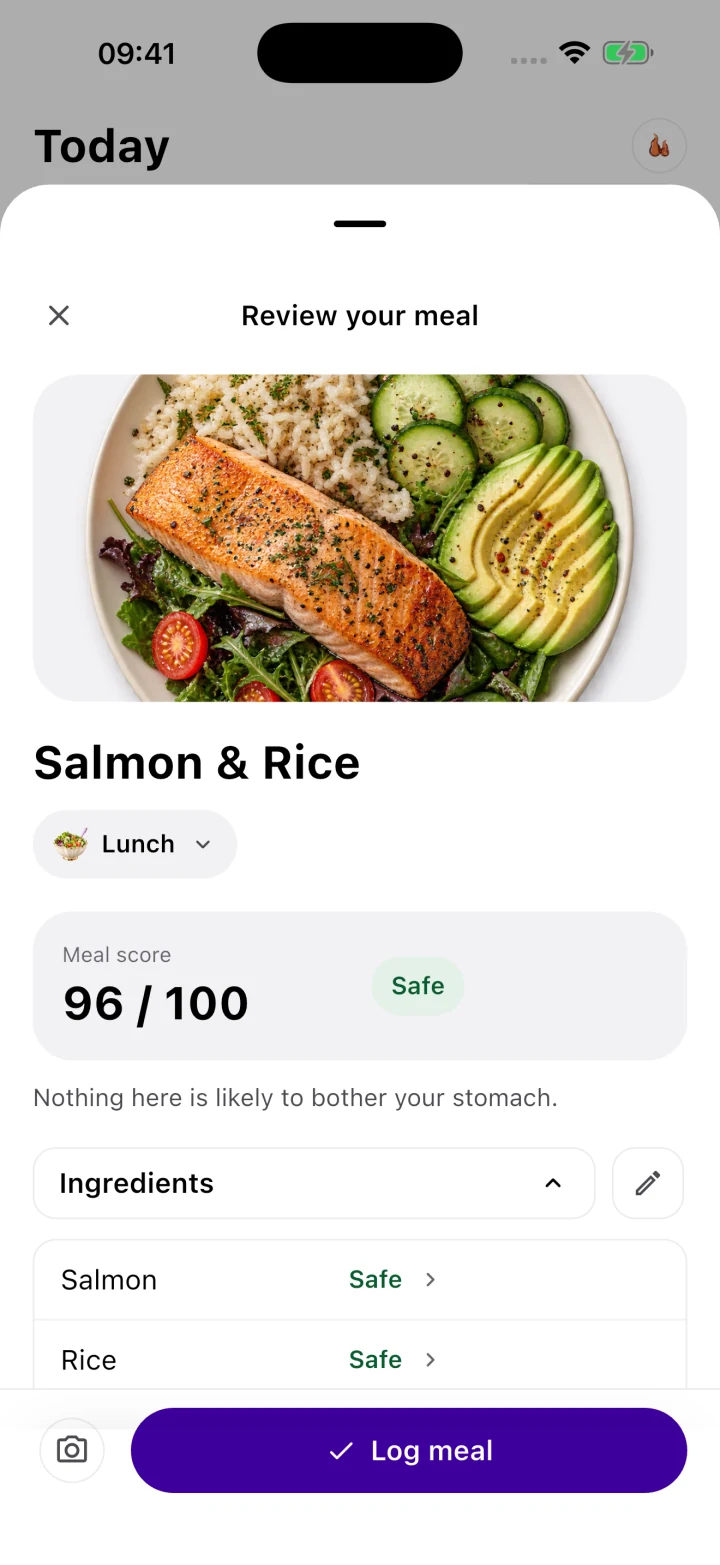
- Steamed Wild Salmon & White Rice · GSI 96: A gold standard meal. Soft protein fibers and anti-inflammatory omega-3 fatty acids without digestive heaviness.
- Boiled Potatoes & Sweet Potatoes · GSI 90: Alkaline-forming starches that break down with minimal enzymatic effort.
- Ripe Bananas & Papaya · GSI 88: Naturally low in acid and containing pectin, which coats and protects the stomach lining.
- Poached Skinless Chicken Breast · GSI 92: High biological value lean protein necessary for tissue repair, without lipid-induced digestive delay.
- Steamed Zucchini & Carrots · GSI 91: Soft, cooked vegetables whose fiber is broken down enough to avoid abrasive friction against stomach tissue.
Foods that require caution (Gastric Safety Index 40–69)
These foods are not universal irritants, but their tolerance depends heavily on individual digestive health, portion size, and cooking methods:
- Soft Scrambled Eggs (Light Olive Oil) · GSI 64: Highly nutritious, but the yolk's fat content can cause discomfort during an acute flare. Best eaten in moderation.
- Low-Fat Plain Yogurt / Kefir · GSI 74: Beneficial probiotics, but the natural lactic acid can sometimes sting sensitive erosions.
- Avocados · GSI 62: Exceptional healthy monounsaturated fats, but half an avocado can still delay gastric emptying if eaten with other rich foods.
- Sourdough Bread · GSI 68: Fermentation makes gluten easier to digest, but dense crusts can cause mechanical friction.
Foods to limit during a flare (Gastric Safety Index 0–39)
These are the foods most often reported as flare triggers, not a permanent ban list. During an active flare, they are the ones worth setting aside first:
- Espresso & Drip Coffee · GSI 22: Coffee can increase gastrin and acid secretion, particularly on an empty stomach.
- Raw Tomatoes & Concentrated Sauces · GSI 28: Citric and malic acid can sting exposed, inflamed tissue.
- Deep-Fried & Fast Foods · GSI 14: Saturated and oxidized fats linger in the stomach for 4 to 6 hours, creating unbearable gastric distension and burning.
- Chili Peppers & Black Pepper · GSI 18: Capsaicin and piperine stimulate sensory pain receptors in the stomach wall and increase acid secretion.
- Alcohol & Carbonated Drinks · GSI 12: Alcohol directly strips the stomach's protective mucus layer, while carbonation expands the stomach chamber and stretches inflamed tissue.
Gastritis food safety comparison
| Food Category | Safe Choice (70–100 GSI) | High Risk Irritant (0–39 GSI) |
|---|---|---|
| Grains & Starches | Safe ChoiceBoiled white rice, oatmeal, sweet potatoes | High RiskPastries, croissants, deep-fried chips |
| Proteins | Safe ChoiceSteamed salmon, poached chicken breast, tofu | High RiskFried bacon, spicy sausage, heavily marbled beef |
| Fruits & Veggies | Safe ChoiceRipe bananas, steamed carrots, zucchini, melons | High RiskGrapefruit, oranges, raw onions, garlic, tomato paste |
| Beverages | Safe ChoiceChamomile tea, warm water, bone broth | High RiskEspresso, cocktails, wine, cola, energy drinks |
A sample 3-day gastritis meal plan
During a flare, smaller and more frequent meals are usually easier than three large ones. This framework is deliberately plain: adjust portions to what you tolerate, and keep logging symptoms afterwards. It is an example, not a prescription.
Day 1 — reset
- Breakfast: Rolled oats cooked in water, sliced ripe banana, a pinch of cinnamon.
- Mid-morning: A cup of warm bone broth or a few plain rice cakes.
- Lunch: Poached chicken breast, soft jasmine rice, steamed carrots.
- Afternoon: Plain low-fat yogurt, if you tolerate dairy.
- Dinner: Steamed salmon, mashed potato, steamed zucchini.
Day 2 — steady
- Breakfast: Oatmeal with ripe papaya.
- Mid-morning: A small bowl of boiled sweet potato.
- Lunch: Steamed white fish, white rice, soft-cooked green beans.
- Afternoon: A ripe banana.
- Dinner: Chicken and vegetable soup with well-cooked carrots and potato.
Day 3 — widen gently
- Breakfast: One slice of sourdough toast with a little olive oil, plus oatmeal.
- Mid-morning: Plain yogurt or a small portion of soft melon.
- Lunch: Baked salmon, boiled potatoes, steamed zucchini.
- Afternoon: Rice cakes with smooth almond butter.
- Dinner: Poached chicken, rice, well-cooked carrots.
Introduce one new food at a time and give it a day before adding another. That is what turns a trigger into a visible pattern instead of a guess.
When diet alone is not enough
A bland diet eases symptoms, but it does not eradicate H. pylori or repair a bleeding peptic ulcer. If you experience persistent vomiting, black tarry stools (melena), unexplainable weight loss, or difficulty swallowing, consult a gastroenterologist immediately.
Frequently asked questions
What is the best food to soothe gastritis during a flare-up?
Cooked rolled oats in water, steamed white rice, bone broth, and ripe bananas are among the gentlest foods during an acute gastritis flare. They have a non-irritating texture, low acidity, and gentle soluble fibers that buffer stomach acid without triggering excess digestive work.
Why do high-fat foods worsen gastritis pain?
Fatty meals stimulate the release of cholecystokinin (CCK), a hormone that slows gastric emptying. When food sits longer in the stomach, the stomach lining is subjected to prolonged exposure to hydrochloric acid and pepsin, aggravating mucosal inflammation.
Can you eat eggs with gastritis?
Yes, but preparation matters. Boiled, poached, or lightly scrambled eggs cooked without excess butter or chili are usually well-tolerated (scoring 64–75 on the Gastric Safety Index). Fried eggs cooked in heavy grease or topped with hot sauce frequently trigger flares.
Are citrus fruits safe for gastritis?
No. Oranges, grapefruits, lemons, and limes have an acidic pH (often 2.0 to 3.5) that directly irritates an inflamed stomach lining. Non-acidic alternatives like melons, papayas, and bananas are much safer choices.
How does the Gastric Safety Index help choose gastritis meals?
The Gastric Safety Index rates meals from 0 to 100 based on acidity, lipid density, and known gastric irritants. Foods rated 70 and above are safe for sensitive stomachs, 40 to 69 require caution, and meals below 40 pose high irritation risks.
If you're considering supplements alongside diet changes, see our analysis of bone broth, gelatin, and glutamine for gut lining repair. For IBS overlap, compare the low-FODMAP vs low-acid diet approaches. And if you need protein without irritation, check our best protein powders for gastritis review.
Sources & background reading
- NIDDK (NIH): Gastritis & Gastropathy
- NIDDK (NIH): Acid Reflux (GER & GERD) in Adults
- Gutrack: how the Gastric Safety Index is built
Background sources for causes, symptoms and treatment. Individual food tolerance varies; example scores are not a diagnosis. See our editorial standards.
This article is for educational purposes only and isn't a substitute for professional medical advice, diagnosis, or treatment. Gutrack is a self-tracking tool, not a medical device. If you're experiencing persistent or concerning symptoms, talk to a doctor.