Quick Answer for Best Protein Powders for Gastritis & Acid Reflux: The best protein powders for gastritis and a sensitive stomach are unflavored hydrolyzed collagen peptides (GSI 94), pure egg white protein powder (GSI 89), and single-ingredient organic pea protein isolate (GSI 86). These formulations eliminate lactose, dietary lipids, and synthetic emulsifiers, allowing rapid gastric emptying without triggering excessive hydrochloric acid or pepsin secretion.
Maintaining lean muscle mass, supporting tissue repair, and achieving basic satiety become exceptionally difficult when your stomach lining is inflamed. Patients recovering from acute or chronic gastritis, gastroesophageal reflux disease (GERD), or Helicobacter pylori eradication therapy face a daily nutritional paradox. Protein is the foundational macronutrient required to rebuild eroded gastric epithelium and synthesize protective mucin glycoproteins. Yet, whole-food protein sources—such as seared beef, roasted poultry, or firm tofu—require extensive mechanical trituration in the antrum and prolonged exposure to hydrochloric acid ($HCl$) and pepsin to break down dense myofibrillar and connective fibers.
To bypass the mechanical workload of chewing and digesting solid meats, millions of patients turn to liquid protein supplements. In clinical practice, however, commercial protein shakes are among the most frequently reported triggers for immediate epigastric burning, sour regurgitation, postprandial fullness, and cramping.
When a patient brings their nutrition history to a gastroenterology consultation following an upper endoscopy (esophagogastroduodenoscopy, or EGD) showing erythematous or erosive gastropathy, the culprit is rarely the macronutrient protein itself. Instead, the symptoms are driven by the biochemical structure of the protein fraction, the molecular weight of the peptides, and the hidden array of industrial excipients engineered into modern fitness supplements.
At Gutrack, we evaluate dietary inputs not by fitness marketing claims, but by their direct physiological impact on a compromised upper gastrointestinal tract. Using our proprietary Gastric Safety Index (GSI)—a 0 to 100 algorithmic scoring system that quantifies meal safety based on lipid content, titratable acidity, osmolarity, fiber friction, and chemical irritants—we have audited the most common protein powder formulations on the market.
Understanding why a standard chocolate whey shake scores a High Risk GSI 28 while an unflavored hydrolyzed collagen smoothie scores a Safe GSI 94 requires examining the exact biochemical mechanisms of gastric protein digestion.
The Physiology of Liquid Protein Digestion in an Inflamed Stomach
When you consume protein, the stomach does not distinguish between a ribeye steak and a powdered shake at the receptor level; it responds to the chemical presence of amino acids and peptides in the gastric lumen.
As protein enters the stomach, it buffers existing free hydrogen ions ($H^+$), temporarily raising the intragastric pH. However, aromatic amino acids—specifically L-phenylalanine and L-tryptophan—along with partially digested peptide fragments, bind directly to calcium-sensing receptors (CaSR) and G-protein-coupled receptor family C group 6 member A (GPRC6A) located on the G-cells of the gastric antrum. This binding triggers the endocrine release of the hormone gastrin into the bloodstream.
Gastrin travels to the enterochromaffin-like (ECL) cells to stimulate histamine release, and binds directly to cholecystokinin-2 (CCK2) receptors on the parietal cells in the oxyntic glands of the gastric corpus. The parietal cells respond by activating hydrogen-potassium ATPase ($H^+/K^+$ ATPase) proton pumps, secreting concentrated $HCl$ into the lumen. Simultaneously, chief cells release pepsinogen, an inactive zymogen. When intragastric pH drops below 4.0 (and optimally between pH 1.5 and 2.5), pepsinogen undergoes autocatalytic cleavage to become active pepsin.
In a healthy stomach, a robust mucosal barrier—composed of surface phospholipids, a dense gel layer of mucin (MUC5AC and MUC6), secreted bicarbonate ions ($HCO_3^-$) that maintain a neutral pH of 7.0 directly at the epithelial surface, and endogenous prostaglandins ($PGE_2$)—protects the stomach wall from this acid-pepsin bath.
In a patient with gastritis, this mucin-bicarbonate barrier is thinned or denuded. In a patient with GERD, transient lower esophageal sphincter relaxations (TLESRs) allow this gastric Mixture to reflux into the squamous epithelium of the esophagus, which lacks any protective bicarbonate layer. Worse still, inactive pepsin molecules adhere to esophageal and pharyngeal tissue during reflux events; whenever the patient subsequently drinks a mildly acidic beverage (with a pH below 4.0), that tissue-bound pepsin reactivates on contact, digesting the patient's own epithelial cell membranes.
Therefore, the clinical objective when selecting a protein powder for gastritis or reflux is threefold:
- Minimize gastric residence time: The faster the liquid empties through the pyloric sphincter into the duodenum, the less time $HCl$ and pepsin remain pooled in the stomach.
- Reduce enzymatic demand: Pre-digested (hydrolyzed) or easily unfolded protein structures require less acid and pepsin secretion to achieve clearance.
- Eliminate chemical and osmotic irritants: The powder must be completely free of compounds that relax the lower esophageal sphincter (LES), delay peristalsis via cholecystokinin (CCK), or draw water into the gut lumen via hyperosmolarity.
Hidden Triggers in Commercial Fitness Supplements
Most patients who tell their gastroenterologist "protein powder hurts my stomach" have been consuming multi-ingredient commercial fitness blends. When we parse the ingredient labels of top-selling retail protein powders through the Gutrack GSI algorithm, we consistently identify four classes of physiological triggers that sabotage mucosal healing.
1. Intact Lactose and Bovine Dairy Lipids in Concentrates
Whey protein concentrate (WPC)—the primary ingredient in budget and mass-market protein powders—is filtered only to a protein concentration of 34% to 80% by weight. The remaining 20% to 66% consists of dairy fats (up to 5 grams per scoop) and residual lactose (4% to 8% by weight).
Even minor concentrations of dietary lipids entering the proximal duodenum stimulate enteroendocrine I-cells to secrete cholecystokinin (CCK). CCK acts via vagal afferent pathways to inhibit antral peristalsis and increase tonic contraction of the pyloric sphincter, effectively trapping the acidic protein liquid in the stomach for an additional 60 to 90 minutes. Simultaneously, CCK reduces the basal resting pressure of the lower esophageal sphincter, creating the exact mechanical conditions required for gastroesophageal reflux.
Furthermore, patients suffering from chronic gastritis or recovering from H. pylori infection or prolonged proton pump inhibitor (PPI) therapy frequently exhibit secondary brush-border lactase deficiency in the proximal small intestine, alongside Small Intestinal Bacterial Overgrowth (SIBO). Unabsorbed lactose from whey concentrate passes into the duodenum and jejunum, where bacteria rapidly ferment it into hydrogen and methane gas. This intraluminal gas expansion increases intra-abdominal pressure, physically pushing gastric contents upward against the LES and triggering epigastric pain via visceral hypersensitivity.
2. Non-Nutritive Sweeteners and Sugar Alcohols
To make protein powders palatable without adding caloric sucrose, manufacturers rely heavily on high-intensity artificial sweeteners—primarily sucralose, acesulfame potassium (Ace-K), and aspartame—or sugar alcohols (polyols) such as erythritol, xylitol, and sorbitol.
Polyols are FODMAPs (Fermentable Oligosaccharides, Disaccharides, Monosaccharides, and Polyols) that are poorly absorbed across the intestinal epithelium. In the stomach and small bowel, they exert a potent hyperosmotic effect. When a hyperosmolar shake hits an inflamed gastric mucosa, the stomach attempts to dilute the solution to isotonicity by pulling extracellular water across the compromised epithelial barrier into the lumen. This rapid fluid shift causes immediate gastric distension, activating stretch mechanoreceptors in the stomach wall that trigger both epigastric aching and vagally mediated TLESRs.
Sucralose and Ace-K, while non-caloric and used in milligram quantities, have been shown in emerging gastroenterological research to alter gut microbiota composition, decrease beneficial short-chain fatty acid production, and increase epithelial permeability by downregulating tight junction proteins like occludin and claudin-1. For a patient with active mucosal erythema on endoscopy, synthetic sweeteners act as direct chemical aggravators to exposed lamina propria nerve endings.
3. Hydrocolloid Thickeners and Emulsifiers (Xanthan, Guar, Carrageenan)
To give water-mixed shakes the rich mouthfeel of a dairy milkshake, formulators add industrial hydrocolloid gums: xanthan gum, guar gum, cellulose gum, and carrageenan.
While certain natural soluble fibers (like oat beta-glucans) provide beneficial colloidal protection, refined industrial gums are engineered for high viscosity and resistance to enzymatic breakdown. Carrageenan, derived from red seaweed, is particularly hazardous for sensitive patients; degraded carrageenan (poligeenan) is so reliably inflammatory to the gastrointestinal mucosa that it is used in laboratory pharmacology to chemically induce experimental gastritis and colitis in animal models. Even food-grade undegraded carrageenan undergoes partial acid hydrolysis when exposed to gastric juice at pH < 2.0, releasing inflammatory fragments that stimulate Toll-like receptor 4 (TLR4) pathways and interleukin-8 (IL-8) production in human gastric epithelial cells.
Xanthan and guar gums artificially increase the viscosity of the gastric chyme. While high viscosity can sometimes reduce the height of a refluxate column in healthy individuals, in patients with gastritis-associated functional dyspepsia or delayed gastric emptying, heavy gums trap gas bubbles and slow down the rate at which the stomach can clear its contents, leading to prolonged acid contact time.
4. Methylxanthines and Acidulants in Flavoring Systems
The vast majority of protein powders are sold in chocolate, mocha, or tangy fruit flavors.
- Chocolate and Cocoa Powder: Real cocoa powder contains theobromine and trace caffeine, both of which are methylxanthines. Methylxanthines inhibit phosphodiesterase enzymes inside the smooth muscle cells of the lower esophageal sphincter, increasing intracellular cyclic AMP (cAMP) and causing potent, sustained relaxation of the LES barrier. Additionally, alkali-processed or natural cocoa powders contain biogenic amines and tannins that irritate raw gastric tissue.
- Fruit Flavors (Citric and Malic Acid): Strawberry, lemon, or tropical protein powders rely on citric acid and malic acid to create tartness. These organic acids dramatically increase the titratable acidity of the shake, dropping the pH of the beverage below the critical pH 4.0 threshold. Drinking a shake with a pH of 3.5 instantly reactivates dormant pepsin molecules adhering to the esophagus and upper stomach, initiating immediate proteolytic burning before the stomach has even begun its own digestive cycle.
Comprehensive Clinical Audit of Protein Sources
When you strip away the sweeteners, gums, and flavorings to look exclusively at pure, unflavored, single-ingredient protein powders, how do the underlying protein structures compare in a compromised stomach? Below is our clinical audit of the five primary protein bases, ranked by their digestive mechanics and Gastric Safety Index profiles.
1. Grass-Fed Hydrolyzed Collagen Peptides (GSI Range: 92–96 | SAFE)
From a purely mechanical and biochemical standpoint, unflavored hydrolyzed collagen peptides are the gold standard for patients in the acute or subacute phases of gastritis and GERD.
Native collagen is a massive triple-helix structural protein with a molecular weight of roughly 300,000 Daltons (Da), making it difficult to digest (as seen in tough cuts of braised meat). Even culinary gelatin (partially hydrolyzed collagen) retains a molecular weight of 50,000 to 100,000 Da and forms a gel in liquids. However, hydrolyzed collagen peptides undergo controlled enzymatic hydrolysis during manufacturing, cleaving the long amino acid chains into tiny oligopeptides, dipeptides, and tripeptides with a low average molecular weight of 2,000 to 5,000 Daltons.
Why it excels in gastritis:
Because the peptide bonds have already been enzymatically broken outside the body, collagen peptides require minimal hydrochloric acid and almost zero pepsin activity in the stomach. They dissolve completely in room-temperature or warm liquids without altering viscosity, contain 0.0 grams of fat, 0.0 grams of carbohydrates/lactose, and exhibit near-zero antigenicity. They pass through the stomach rapidly, absorbing intact across the duodenal brush border via the PEPT1 (peptide transporter 1) carrier system within 20 to 30 minutes of ingestion.
Clinical Caveat: Collagen is an incomplete protein because it completely lacks the essential amino acid L-tryptophan and is relatively low in branched-chain amino acids (leucine, isoleucine, valine) compared to whey. However, for a gastritis patient, the lack of L-tryptophan is actually a secondary physiological benefit: because L-tryptophan is one of the two primary amino acids that stimulate antral G-cells to release gastrin, tryptophan-free collagen peptides provoke a significantly smaller acid rebound response than complete proteins. To make collagen nutritionally complete over a 24-hour period, patients simply need to ensure their solid meals contain modest amounts of poultry, fish, oats, or eggs.
2. Pure Egg White Protein Powder / Dried Albumen (GSI Range: 85–90 | SAFE)
Before the rise of dairy whey in the late 20th century, spray-dried, pasteurized egg white protein powder (albumen) was the foundational clinical protein supplement. Whole eggs have a split gastric profile: the yolk contains roughly 5 grams of lipid and phospholipids that trigger CCK and slow emptying, whereas the white is pure, fat-free water and albumin protein.
Why it excels in gastritis:
Pure egg white powder contains zero lactose, zero dairy casein, and 0.0 grams of fat. Its primary proteins—ovalbumin, ovotransferrin, and ovomucoid—denature easily in mild gastric acid without forming solid curds in the stomach lumen. Because it is a complete protein with a massive Biological Value (BV) and Protein Digestibility-Corrected Amino Acid Score (PDCAAS) of 1.0, it provides all nine essential amino acids required for systemic muscle preservation during periods of restricted caloric intake.
Clinical Caveat: Raw egg whites contain avidin (which binds biotin) and ovomucoid (a trypsin inhibitor that can cause gas if unheated). Patients must select pasteurized, heat-treated egg white powders where these enzyme inhibitors have been deactivated. Furthermore, because egg albumin is rich in sulfur-containing amino acids (methionine and cysteine), mixing it too vigorously can create a stiff meringue-like foam. Swallowing whipped air (aerophagia) causes immediate gastric distension and belching, which carries acid into the esophagus. Always let an egg white shake settle for 5 minutes before drinking, or stir it gently into warm oatmeal rather than blending on high speed.
3. Single-Ingredient Organic Pea Protein Isolate (GSI Range: 82–88 | SAFE)
For vegan patients or those with documented IgE or IgG-mediated sensitivities to dairy and egg proteins, unflavored organic yellow split pea protein isolate is the premier plant-based option.
Whole legumes (lentils, chickpeas, black beans) are notoriously difficult to tolerate during gastritis flares because their outer seed coats contain insoluble cellulose fibers, and their interiors are packed with galacto-oligosaccharides (GOS) and phytic acid. GOS are FODMAPs that ferment rapidly, while phytates bind to digestive enzymes and inhibit proteolysis.
Why it excels in gastritis:
When yellow split peas (Pisum sativum) are processed into an isolate (as opposed to a whole pea flour or concentrate), wet-milling and isoelectric precipitation strip away the insoluble hulls, starch, and water-soluble GOS oligosaccharides, leaving behind a powder that is 80% to 85% pure globulin (legumin and vicilin) and albumin proteins. Pea protein isolate has a naturally alkaline to neutral pH (typically pH 6.5 to 7.2 when mixed in water), meaning it actively buffers free stomach acid upon ingestion without requiring artificial carbonate buffers.
Clinical Caveat: Pea protein isolate naturally contains higher levels of sodium (extracted during the sodium hydroxide alkaline solubilization step of manufacturing), typically 250 mg to 390 mg per serving. High intragastric sodium concentrations can irritate severe mucosal erosions if consumed in a concentrated slurry. Patients should dilute pea protein isolate in at least 300 mL (10 oz) of liquid per 25-gram scoop and verify that the label reads "Pea Protein Isolate" rather than "Whole Pea Protein."
4. Organic Sprouted Brown Rice Protein Isolate (GSI Range: 78–84 | SAFE)
Sprouted brown rice protein isolate is completely hypoallergenic, gluten-free, dairy-free, and devoid of FODMAPs. It is frequently combined with pea protein in a 30:70 ratio because rice protein is rich in the sulfur-containing amino acids cysteine and methionine (where pea is slightly low), while pea is rich in lysine (where rice is low).
Why it ranks slightly below Pea and Collagen:
The primary storage proteins in rice—glutelins and prolamins—are inherently hydrophobic. Even when micronized to a fine mesh size, rice protein does not dissolve fully in water; it forms a colloidal suspension with a slightly chalky, gritty texture. In patients with active antral gastritis or severe esophageal hypersensitivity, this microscopic particulate friction can occasionally trigger a mild mechanical cough or sensation of globus pharyngeus (a lump in the throat) if not blended into a soothing, mucilaginous carrier like oat milk or banana puree.
5. Whey Protein Isolate - WPI 90 vs. Whey Concentrate - WPC 80 (GSI Range: 32–76 | CAUTION TO HIGH RISK)
In clinical nutrition, the distinction between Whey Protein Isolate (WPI 90), Whey Protein Hydrolysate (WPH), and Whey Protein Concentrate (WPC 80) is critical.
Dairy milk protein is 80% casein and 20% whey. Casein (often sold as "Micellar Casein" for nighttime muscle recovery) is classified as a "slow protein" precisely because, upon hitting gastric acid, casein micelles precipitate into dense, rubbery solid curds inside the stomach. These curds take 4 to 7 hours to dissolve and empty through the pylorus—making micellar casein an automatic High Risk (GSI 18) trigger that guarantees prolonged acid exposure and nocturnal reflux.
Whey protein, conversely, remains soluble in stomach acid and is classified as a "fast protein." However:
- Whey Protein Concentrate (WPC 80 - GSI 32): As detailed earlier, retains enough lactose and milk fat to trigger CCK-mediated delayed emptying and osmotic bloating.
- Cross-Flow Microfiltered Whey Protein Isolate (WPI 90 - GSI 76): Undergoes ceramic membrane filtration at cold temperatures, yielding >90% pure protein with less than 0.5% lactose and <0.5 grams of fat. For a patient in the maintenance or recovery phase of mild GERD or healed gastritis, an unflavored, sunflower-lecithin-instantized WPI 90 is generally well tolerated.
- Why WPI 90 still requires caution during active flares: Even pure whey isolate contains high concentrations of beta-lactoglobulin (a protein absent in human breast milk that can provoke localized mucosal immune responses in sensitive guts) and massive amounts of branched-chain amino acids and aromatic amino acids that drive a robust insulinotropic and gastrinemic spike. In an actively bleeding or eroded stomach, the rapid gastrin surge following a pure whey bolus can outpace the buffering capacity of the liquid, leading to a sharp drop in intragastric pH 45 minutes post-ingestion.
The Glycine Advantage: How Collagen Peptides Support Epithelial Tight Junctions
While fitness literature often dismisses collagen peptides due to their lower leucine content for skeletal muscle hypertrophy, clinical gastroenterology views collagen's unique amino acid chromatogram through a completely different lens.
Collagen peptides are composed of a repeating tripeptide sequence (Gly-X-Y), where glycine accounts for roughly 22% to 25% of the total amino acid residues, proline accounts for 12%, and hydroxyproline accounts for 10% to 12%. No other dietary protein source—animal or plant—provides glycine and proline at these concentrations (whey protein, by contrast, contains less than 2% glycine).
In the upper gastrointestinal tract, dietary glycine and proline act as targeted cytoprotective agents through three distinct physiological pathways:
1. Inhibition of Gastric Acid Hypersecretion and Ulcerogenesis
Classic and contemporary pharmacological studies examining experimental gastric ulceration (induced by pyloric ligation, indomethacin/NSAID exposure, or ethanol) demonstrate that oral administration of L-glycine exerts a direct antisecretory effect in the stomach. Unlike proton pump inhibitors that covalently block $H^+/K^+$ ATPase pumps systemically, intraluminal glycine modulates local neurocrine pathways in the gastric mucosa, attenuating excessive $HCl$ output while preserving baseline digestive capacity.
2. Upregulation of Epithelial Tight Junction Proteins (ZO-1 and Occludin)
Chronic gastritis and non-erosive reflux disease (NERD) are characterized microscopically by dilated intercellular spaces (DIS) in the squamous and columnar epithelium. When acid, pepsin, and bile salts penetrate between cells, they degrade the protein complexes that seal the paracellular pathway: zonula occludens-1 (ZO-1), occludin, and claudins. Once these tight junctions fail, hydrogen ions diffuse into the submucosa, depolarizing nociceptive C-fibers and causing the deep, gnawing pain of gastritis.
Hydroxyproline-containing dipeptides (specifically Pro-Hyp and Gly-Pro-Hyp) absorbed from hydrolyzed collagen have been shown in human intestinal and gastric cell culture models (such as Caco-2 and GES-1 monolayers) to resist inflammatory cytokine (TNF-$\alpha$) damage. These peptides stimulate fibroblasts in the lamina propria to synthesize new extracellular matrix collagen (Types I, III, and IV) while upregulating the expression of ZO-1 and occludin, physically tightening the mucosal seal against acid back-diffusion.
3. Glutathione Synthesis and Mucosal Antioxidant Defense
H. pylori infection, NSAID usage, and chronic bile reflux generate massive quantities of reactive oxygen species (ROS) and lipid peroxides within the gastric mucosa, depleting endogenous antioxidant reserves. The primary intracellular antioxidant defending gastric epithelial cells from oxidative necrosis is reduced glutathione (GSH)—a tripeptide synthesized from L-glutamate, L-cysteine, and L-glycine.
While cysteine is frequently considered the rate-limiting substrate for GSH synthesis, clinical metabolic tracer studies demonstrate that during states of chronic tissue inflammation, glycine availability becomes limiting. Providing 10 to 20 grams of hydrolyzed collagen peptides delivers roughly 2.5 to 5.0 grams of bioavailable glycine directly to the splanchnic bed, fueling mucosal glutathione regeneration and dampening neutrophil-mediated oxidative tissue damage.
GSI Protein Powder Scoring Table
To translate this biochemistry into immediate clinical utility, our research team evaluated six representative protein supplement formulations using the Gutrack Gastric Safety Index (GSI). Each score reflects a standard 25-gram protein serving mixed in 250 mL of water, evaluating its impact on gastric emptying velocity, titratable acidity, LES sphincter tone, and mucosal irritation.
| Protein Formulation | GSI Score (0–100) | Safety Zone | Primary Physiological Mechanism & Mucosal Impact |
|---|---|---|---|
| Unflavored Grass-Fed Hydrolyzed Collagen Peptides (Single ingredient, MW < 3,000 Da) |
94 / 100 | SAFE | Pre-cleaved di/tripeptides bypass heavy pepsin and $HCl$ requirements; 0g lipid prevents CCK transit delay; high glycine (~5g/serving) supports tight junctions and mucosal restitution; rapid duodenal clearance (<30 mins). |
| Pure Unflavored Egg White Protein Powder (Pasteurized dried albumen, no gums) |
89 / 100 | SAFE | Complete amino acid profile with 0g fat and 0g lactose; neutral pH (~6.8) buffers free intragastric $H^+$ ions; unfolds rapidly without forming solid gastric curds. Requires gentle stirring to prevent aerophagia foam. |
| Single-Ingredient Organic Pea Protein Isolate (85% filtration, unflavored) |
86 / 100 | SAFE | Isoelectric isolation removes fermentable GOS oligosaccharides and insoluble seed hulls; alkaline buffering capacity (pH 7.0) neutralizes basal acid; moderate gastric emptying velocity without LES relaxation. |
| Unflavored Cold-Filtered Whey Protein Isolate (WPI 90) (Sunflower lecithin only, <0.5% lactose) |
76 / 100 | SAFE / BORDERLINE CAUTION | Microfiltration removes CCK-triggering dairy fats and fermentable lactose; remains liquid in gastric acid. However, dense aromatic/BCAA profile induces a sharp post-absorptive gastrin and $HCl$ surge at 45 minutes. Safe for maintenance; caution in active erosions. |
| Vanilla Plant Blend with Stevia, Erythritol & Xanthan Gum (Pea/Rice/Hemp blend + hydrocolloids) |
48 / 100 | CAUTION | Erythritol creates a hyperosmolar lumen, pulling water across the mucosa and inducing stretch-receptor distension; xanthan gum artificially increases chyme viscosity, delaying antral clearance; hemp seed hulls cause microscopic mechanical friction. |
| Commercial Chocolate Whey Concentrate (WPC 80) (Cocoa, Sucralose, Ace-K, Carrageenan) |
28 / 100 | HIGH RISK | 4–5g dairy lipids trigger CCK, halting gastric emptying; cocoa theobromine relaxes the LES barrier; residual lactose ferments into gas; sucralose and acid-degraded carrageenan irritate exposed epithelial tight junctions. |
Why Traditional Food Logging Fails During Protein Supplementation
When patients attempt to figure out which protein powder or smoothie recipe they can tolerate using a standard notebook or a generic calorie-tracking app, they almost universally fall into the "everything feels like a trigger" trap.
Consider a common clinical scenario: A patient buys an unflavored organic pea protein isolate (GSI 86). On Monday morning, they mix it with water and a ripe banana, and experience zero symptoms. On Tuesday morning, wanting more flavor and calories, they blend that exact same protein scoop with frozen strawberries, a tablespoon of creamy peanut butter, and almond milk containing carrageenan. Forty minutes later, they experience severe retrosternal burning and sour regurgitation. Because the protein powder is the "new supplement" in their routine, the patient blames the pea protein, throws the tub away, and concludes they cannot digest plant protein.
What actually happened physiologically?
- The frozen strawberries introduced citric and malic acid, dropping the smoothie's pH to 3.6 and immediately activating tissue-bound pepsin in the esophagus.
- The freezing temperature of the berries induced transient esophageal spasm and slowed down gastric peristalsis (cold liquids empty significantly slower than room-temperature liquids).
- The peanut butter added 8 grams of dense lipids, triggering a duodenal CCK surge that locked the pyloric sphincter shut and dropped LES resting pressure, trapping the acidic strawberry-protein mixture in the stomach for three hours.
Without an algorithmic scoring mechanism that evaluates the synergistic biochemistry of the entire meal, human pattern recognition fails. Moreover, gastric mucosal inflammation exhibits a delayed symptom latency: an irritant consumed at 8:00 AM may sensitize the mucosa by stripping away surface mucin, causing a completely bland lunch at 12:30 PM to burn when normal postprandial acid hits the newly unprotected tissue.
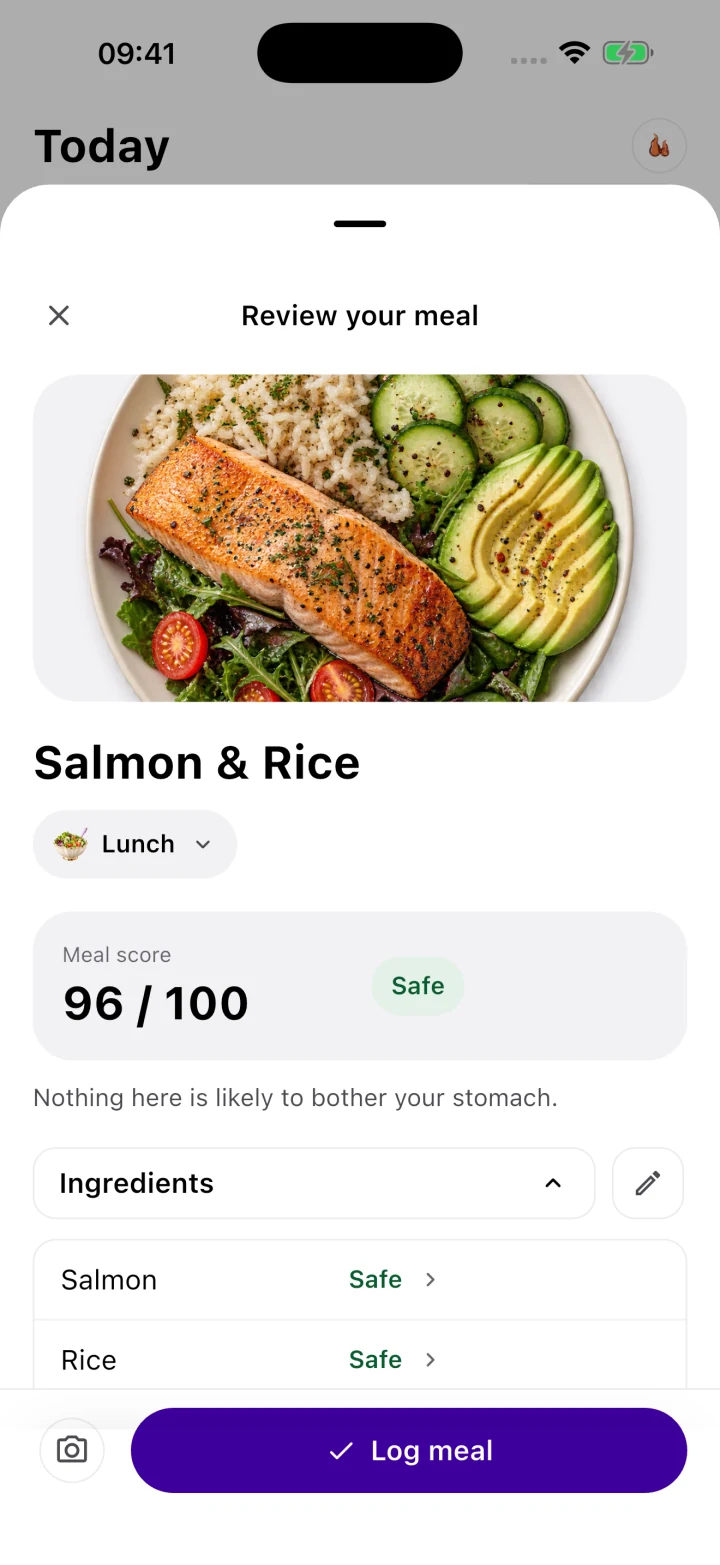
This is precisely why we engineered Gutrack (gutrack.com) for iOS. Instead of logging isolated text lists that leave you and your doctor guessing, Gutrack allows you to scan or input your exact smoothie formulation and receive an instant 0–100 Gastric Safety Index (GSI) score before you take a single sip. The algorithm calculates the net pH, lipid load, FODMAP osmolarity, and additive risk of all combined ingredients.
When you prepare for your next gastroenterology follow-up, you can export a 14-day objective clinical PDF report directly from Gutrack. Rather than handing your physician a messy food diary, you provide a clean timeline correlating daily GSI meal scores against timestamped symptom severity, medication adherence (such as PPI timing), and bowel kinetics—allowing your specialist to make precise clinical adjustments in seconds.
Building a Gastritis-Safe Protein Smoothie: The Clinical Blueprint
Purchasing a high-GSI protein powder is only half the equation; how you prepare and combine that powder determines whether it heals or irritates your stomach. When constructing a liquid protein meal during gastritis recovery or active GERD, adhere strictly to the following five clinical formulation rules.
1. Select an Alkaline, Mucilaginous Base Liquid
Never mix protein powder with citrus juices, apple juice, or commercial plant milks fortified with gums and seed oils.
- Best Choices: Homemade or clean-label oat milk (containing only water and hydrolyzed oats), almond milk (containing only water and peeled almonds, such as Three Trees or Malk), or plain filtered water.
- The Oat Beta-Glucan Synergy: Oat milk is uniquely advantageous for gastritis because oats are rich in beta-glucans—water-soluble polysaccharides that form a gentle, demulcent colloidal gel upon contact with water. Unlike industrial xanthan gum, oat beta-glucans coat the inflamed gastric mucosa in a biocompatible mucilaginous layer that mimics endogenous mucin, physically shielding raw epithelial cells from $HCl$ and pepsin while providing prebiotic nourishment to the microbiome.
2. Buffer with Low-Acid, Pectin-Rich Carbohydrates
Drinking a pure protein-and-water shake on an empty stomach triggers a rapid, unbuffered gastrin response. Adding a gentle, low-acid carbohydrate source slows the rate of amino acid delivery to antral G-cells while absorbing excess free liquid in the stomach.
- Ripe Cavendish Banana (pH 5.0–5.3): Ensure the peel has brown sugar spots, indicating that resistant starch has converted into easily digestible simple sugars. Bananas are rich in pectin (a soluble fiber that accelerates safe gastric emptying) and leucocyanidin, a flavonoid compound shown in mucosal histology studies to significantly increase the thickness of the gastric mucus layer via prostaglandin-independent pathways.
- Rolled Oats (Pre-soaked or Quick): Blending 20 to 30 grams of rolled oats into the shake adds soluble beta-glucan protection and sustained caloric density without adding a single gram of fat.
- Steamed and Frozen Zucchini or Japanese Sweet Potato: For patients who cannot tolerate the sugar in bananas (due to concurrent SIBO or Candida overgrowth), peeled, steamed, and cooled zucchini or white-fleshed sweet potato blends into a thick, creamy texture with a neutral pH above 5.8 and zero fermentable load.
3. Strictly Cap Total Lipid Load at < 3.0 Grams
Fitness recipes routinely call for 2 tablespoons of peanut butter, almond butter, chia seeds, or MCT oil to be blended into protein shakes. In a gastritis patient, 2 tablespoons of nut butter delivers 16 grams of fat, instantly plummeting the meal's GSI score from the 80s down into the 40s (Caution) due to CCK-mediated gastric stasis.
- The Rule: If you need healthy fats for caloric maintenance, restrict the addition to 1 level teaspoon (approx. 5 grams by weight, yielding ~2.5g fat) of smooth, pure almond butter or tahini. Avoid whole chia seeds, flaxseeds, or raspberry seeds entirely during active gastritis; their sharp, indigestible hulls act like microscopic sandpaper when ground against erythematous antral tissue during peristaltic contractions.
4. Control Temperature and Aeration (The Anti-Aerophagia Protocol)
- Temperature: Never consume ice-cold, slushy protein smoothies. Cold temperatures (< 10°C / 50°F) shock the vagus nerve terminals in the stomach wall, temporarily paralyzing antral motility and delaying gastric emptying by up to 45 minutes compared to meals at body temperature (37°C). Use room-temperature liquids and minimal frozen ingredients, or let the blended shake sit on the counter for 15 minutes to warm up before drinking.
- De-aeration: High-powered vortex blenders (like Vitamix or Ninja) whip massive volumes of ambient air into protein mixtures, particularly when blending whey isolate or egg white protein. Drinking a frothy, aerated shake introduces hundreds of milliliters of nitrogen and oxygen gas directly
Self-tracking tool, not clinical diagnosis
Gutrack provides evidence-based Gastric Safety Index estimates for daily self-management and diet optimization. It does not replace medical consultation, endoscopy, or treatment prescribed by a qualified gastroenterologist.
Frequently asked questions
Is whey protein bad for gastritis and acid reflux?
Standard whey protein concentrate (GSI 32) frequently triggers gastritis and reflux because it retains 4% to 8% lactose and up to 5 grams of milk fat per serving, which stimulate cholecystokinin (CCK) and delay gastric emptying. Pure, unflavored cross-flow microfiltered whey protein isolate (WPI 90, GSI 76) removes over 99% of lactose and lipids, making it tolerable for mild reflux, though dairy-sensitive patients should still avoid it during active mucosal erosion.
What protein powder is easiest to digest for sensitive stomachs?
Unflavored hydrolyzed collagen peptides (GSI 94) are the easiest protein supplement to digest because enzymatic hydrolysis pre-cleaves the amino acid chains into low-molecular-weight dipeptides and tripeptides (under 3,000 Daltons). These tiny peptides bypass the need for heavy gastric acid and pepsin denaturation, absorbing rapidly in the duodenum within 20 to 30 minutes without causing gastric distension.
Do artificial sweeteners in protein powder cause stomach burning?
Yes, non-nutritive sweeteners like sucralose, acesulfame potassium, and sugar alcohols (erythritol, xylitol) frequently provoke epigastric burning and bloating. These compounds alter the osmotic gradient in the stomach and duodenum, draw excess water into the lumen, and disrupt the protective mucin-bicarbonate barrier at concentrations as low as 50 mg per serving.
Can collagen peptides help heal the stomach lining?
Collagen peptides contain roughly 20% to 25% glycine and 12% proline by weight, two amino acids clinically shown to support mucosal restitution and epithelial tight junction integrity. In experimental models of gastric ulceration, dietary glycine inhibits excessive hydrochloric acid secretion and reinforces the prostaglandin-mediated mucus barrier against pepsin auto-digestion.
Clinical Evidence & Scientific References
- Hoffman JR, Falvo MJ. Protein – Which is Best? J Sports Sci Med. 2004;3(3):118-130.
- Suez J, et al. Non-nutritive sweeteners induce hepatic and gastrointestinal microvascular stress. Cell. 2022;185(18):3307-3328.
- Minaguchi J, et al. Effects of collagen peptide ingestion on gastric mucosal integrity and wound healing. FEBS Open Bio. 2012;2:265-271.
This article is for educational purposes only and isn't a substitute for professional medical advice, diagnosis, or treatment. Gutrack is a self-tracking tool, not a medical device. If you're experiencing persistent or concerning symptoms, talk to a doctor.