Gutrack
Quick Answer for Gastric Safety Index: The Gastric Safety Index (GSI) is a specialized 0–100 algorithm that scores meals based on stomach lining compatibility, titratable acidity, lipid-induced gastric delay, and lower esophageal sphincter relaxation. Scores of 70+ are gentle and safe, 40–69 require caution, and 0–39 represent high flare risk.
What is the Gastric Safety Index?
For decades, digital nutrition has been dominated by calorie counts, macronutrient ratios (protein, carbohydrates, fats), and weight loss tracking. But for the estimated 60 million adults living with gastritis, GERD, non-ulcer dyspepsia, or acid reflux, calorie counting is completely useless.
A zero-calorie diet cola or an espresso shot has no calories, yet both trigger intense stomach acid surges and sphincter failure. Conversely, a 500-calorie plate of steamed salmon, jasmine rice, and avocado provides restorative nutrients that soothe mucosal inflammation.
The Gastric Safety Index (GSI) was created to solve this fundamental gap: a single, intuitive metric from 0 to 100 that reflects upper gastrointestinal tolerance rather than caloric density.
The three scoring zones
Every logged or scanned meal in Gutrack falls into one of three color-coded zones:
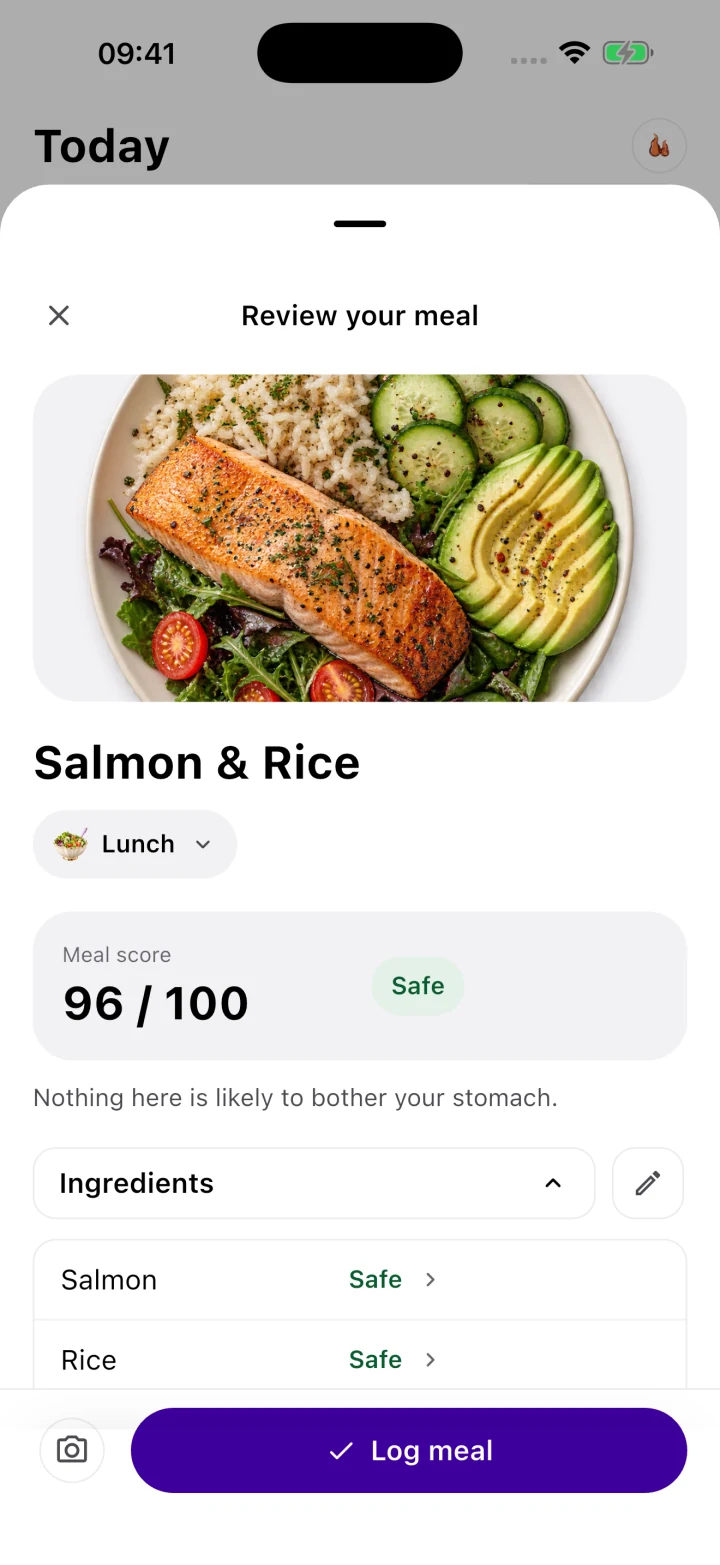
- Safe Zone (70–100): Meals characterized by low titratable acidity, gentle soluble fibers, lean proteins, and easily metabolized fats. These meals minimize hydrochloric acid overproduction, support steady gastric emptying (90 to 120 minutes), and protect the stomach lining. Example: Steamed Salmon & White Rice (Score: 96).
- Caution Zone (40–69): Balanced meals containing moderate fats or secondary trigger ingredients (such as cooked eggs, small amounts of hard cheese, or whole grains). These are generally tolerated during remission but should be tracked closely during active flares.
- High Risk Zone (0–39): Meals combining aggressive physiological triggers: high saturated lipid concentration (prolonging stomach emptying by hours), direct chemical sphincter relaxers (caffeine, menthol, theobromine, alcohol), or low pH (< 4.6). Example: Pepperoni Pizza with Espresso (Score: 18).
The 4 biological variables evaluated
When you scan a photo of your meal or log ingredients in Gutrack, the GSI analyzes four distinct biochemical vectors:
- Estimated Titratable Acidity (pH Level): Measures whether food components have an acidic pH (< 4.6) that directly stings exposed ulcers and inflamed stomach mucosa upon contact.
- Lipid Density & Gastric Transit Delay: High quantities of free oils or animal fats stimulate cholecystokinin (CCK), shutting down pyloric sphincter transit and trapping food inside the stomach for up to 6 hours.
- Lower Esophageal Sphincter (LES) Chemical Modifiers: Flags compounds known to relax the esophageal valve (caffeine, dark chocolate theobromine, peppermint menthol, ethanol).
- Mucosal Surface Friction: Evaluates coarse insoluble fibers (e.g. raw kale, seeded berries) vs soothing soluble mucilage (e.g. oatmeal beta-glucans, pectin, steamed starches).
Gastric Safety Index reference scores
| Meal / Food Item | GSI Score | Category | Primary Mechanism |
|---|---|---|---|
| Steamed Wild Salmon with Jasmine Rice | 96 / 100 | Safe | Soft protein fibers, omega-3s, soothing starch, zero irritants. |
| Warm Rolled Oats with Ripe Banana | 94 / 100 | Safe | Soluble beta-glucan creates a protective colloidal barrier. |
| Poached Chicken Breast with Steamed Carrots | 92 / 100 | Safe | Lean biological protein; optimal 90-minute stomach clearance. |
| Soft Scrambled Eggs with Sourdough Toast | 64 / 100 | Caution | Nutrient-dense; moderate egg yolk lipid content requires tracking. |
| Greek Yogurt with Blueberries & Honey | 58 / 100 | Caution | Beneficial probiotics, but mild lactic and berry acidity. |
| Espresso / Drip Coffee (Black) | 22 / 100 | High Risk | Potent stimulant of gastrin and HCl; weakens LES sphincter tone. |
| Spicy Buffalo Wings with Ranch Dressing | 14 / 100 | High Risk | Triple trigger: deep-fried oxidized fat, extreme capsaicin, acidic vinegar. |
The personal calibration loop
No two digestive systems are identical. A person with atrophic gastritis has very different gastric chemistry than someone with an incompetent lower esophageal sphincter or a hiatal hernia.
This is why Gutrack combines baseline biochemical scores with your personal logging history. If you log a meal that scores 75, but consistently record discomfort 90 minutes later, Gutrack flags that specific recipe or ingredient on your personal timeline, allowing you to discover your own unique sensitivities.
Self-tracking tool, not clinical diagnosis
The Gastric Safety Index provides evidence-based estimates for daily self-management and diet optimization. It does not replace medical consultation, endoscopy, or diagnostic testing conducted by a qualified gastroenterologist.
Frequently asked questions
What is the Gastric Safety Index?
The Gastric Safety Index (GSI) is a 0 to 100 meal evaluation score developed by Gutrack. It measures how gentle a meal is on the stomach lining and lower esophageal sphincter. Higher scores mean greater gastric tolerance: 70–100 is Safe, 40–69 requires Caution, and 0–39 indicates High Risk.
How is the Gastric Safety Index calculated?
The GSI evaluates meals across four core biological dimensions: estimated titratable acidity (pH), lipid density affecting gastric emptying speed, known lower esophageal sphincter chemical relaxers (such as caffeine or menthol), and mechanical mucosal friction from coarse raw fibers.
Why is calorie counting unhelpful for gastritis and GERD?
Calorie counters track energy balance for weight loss, which has no relationship to stomach mucosal irritation. A 200-calorie black espresso with hot sauce can trigger severe mucosal spasms, while a 500-calorie plate of steamed salmon and rice is soothing to the stomach lining.
Does the Gastric Safety Index adapt to individual triggers?
Yes. While the baseline GSI uses established biochemical and nutritional benchmarks, Gutrack personalizes your insights over time. If you repeatedly log symptoms after eating a specific ingredient (such as garlic or dairy), Gutrack flags that ingredient in your personal pattern timeline.
What is an example of a 90+ Gastric Safety Index meal?
Steamed wild salmon served with boiled white jasmine rice and steamed zucchini scores a 96 out of 100 (Safe). It contains easily digestible protein, non-acidic carbohydrates, anti-inflammatory omega-3 fatty acids, and low saturated fat.
Sources & background reading
Background sources for causes, symptoms and treatment. Individual food tolerance varies; example scores are not a diagnosis. See our editorial standards.
Ready to check a specific food? Use the free food checker tool to search any food and get its GSI score, risk zone, and portion guidance. For meal planning with GSI scores, see the complete gastritis diet guide.
This article is for educational purposes only and isn't a substitute for professional medical advice, diagnosis, or treatment. Gutrack is a self-tracking tool, not a medical device. If you're experiencing persistent or concerning symptoms, talk to a doctor.