Quick Answer for Bile Reflux vs Acid Reflux: Acid reflux involves gastric hydrochloric acid (pH 1.5–3.5) rising into the esophagus, whereas bile reflux occurs when alkaline duodenal fluid (pH 7.5–8.5) backs up through the pyloric sphincter into the stomach. PPIs fail for bile reflux because they only block acid production, leaving detergent bile salts untouched to erode the mucosal lining.
Not a treatment protocol
This guide has not been reviewed by a licensed clinician. Specific figures are illustrative, and no food score is a prescription. Talk to your gastroenterologist before changing your diet or medication. See our editorial standards.
In gastroenterology clinics worldwide, up to 40% of patients prescribed proton pump inhibitors (PPIs) such as omeprazole, pantoprazole, or esomeprazole report incomplete or zero symptom relief. When a patient adheres strictly to a twice-daily 40 mg PPI regimen for eight weeks and continues to experience relentless epigastric burning, chest discomfort, and nocturnal regurgitation, the clinical presumption of standard gastroesophageal reflux disease (GERD) must be re-evaluated.
The standard diagnostic reflex is often to escalate acid suppression—switching to potassium-competitive acid blockers (P-CABs) or adding nighttime H2 receptor antagonists. However, if gastric pH is already elevated above 5.0 by pharmacotherapy and the patient remains symptomatic, hydrochloric acid is rarely the primary driver of the pain. In a vast majority of these refractory cases, the underlying pathology is duodenogastroesophageal reflux (DGER), commonly known as bile reflux.
Unlike classic acid reflux, which involves the retrograde movement of stomach acid across a single valve (the lower esophageal sphincter, or LES), bile reflux is a two-stage mechanical failure. Digestive fluid produced by the liver and secreted into the duodenum travels backward through the pyloric sphincter into the stomach, and subsequently upward through the LES into the esophagus and pharynx.
Because bile is an alkaline, lipid-emulsifying detergent rather than a simple acid, conventional antacids and PPIs are biochemically unequipped to halt its destructive action on the gastrointestinal mucosa. Understanding the physiological divergence between hydrochloric acid and bile salts—and restructuring daily nutrition around the Gastric Safety Index (GSI) to regulate gallbladder contraction—is essential for halting chemical gastritis and restoring mucosal integrity.
Biochemical Differences: Hydrochloric Acid vs. Alkaline Bile Salts
To understand why standard reflux protocols fail in bile reflux patients, one must examine the distinct chemical compositions and mechanisms of tissue injury associated with gastric juice versus duodenal fluid. The human stomach is engineered to withstand extreme acidity, but it possesses virtually no innate defense against concentrated alkaline detergents.
The Physiology of Acid-Peptic Injury (pH 1.5–3.5)
Gastric parietal cells secrete concentrated hydrochloric acid ($HCl$), maintaining a baseline luminal pH between 1.5 and 2.5 in a fasted state. This highly acidic environment serves two primary digestive functions: denaturing dietary proteins and cleaving inactive pepsinogen (secreted by chief cells) into the active proteolytic enzyme pepsin.
Pepsin exhibits peak enzymatic activity at a pH of 1.8 to 2.5. As luminal pH rises above 4.0, pepsin activity drops precipitously; above pH 6.5, the enzyme is irreversibly denatured. In standard acid reflux, transient lower esophageal sphincter relaxations (TLESRs) allow this acidic, pepsin-rich mixture to contact the stratified squamous epithelium of the esophagus. Because the esophagus lacks the thick, bicarbonate-buffered mucus layer of the stomach, hydrogen ions ($H^+$) and active pepsin digest intercellular junctional proteins (such as E-cadherin), resulting in dilated intercellular spaces, nociceptor stimulation, and erosive esophagitis.
In the stomach itself, the mucosa is protected from its own acid by a multi-tiered defense system:
- The Surface Phospholipid Monolayer: A hydrophobic coating of surfactant-like phospholipids that repels aqueous acid.
- The Mucus-Bicarbonate Barrier: An unstirred gel layer of mucin glycoproteins injected with bicarbonate ions ($HCO_3^-$), which maintains a neutral pH of 7.0 directly at the epithelial cell surface even when the stomach lumen is at pH 1.5.
- Mucosal Prostaglandins ($PGE_2$ and $PGI_2$): Signaling lipids that stimulate mucus production, bicarbonate secretion, and mucosal blood flow to rapidly clear any back-diffusing hydrogen ions.
The Detergent Toxicity of Bile Salts (pH 7.5–8.5)
Bile is a complex aqueous fluid synthesized by hepatocytes, concentrated in the gallbladder, and discharged into the second part of the duodenum via the ampulla of Vater. Its primary active components are bile acids (cholic acid and chenodeoxycholic acid) conjugated with the amino acids glycine or taurine, alongside cholesterol, phospholipids (primarily lecithin), bilirubin pigments, and pancreatic bicarbonate. Newly secreted hepatic and gallbladder bile has an alkaline pH ranging from 7.5 to 8.5.
The physiological role of bile salts is to emulsify dietary triglycerides into microscopic micelles, allowing pancreatic lipase to digest fats. However, when pyloric sphincter incompetence allows duodenal contents to regurgitate into the stomach, these amphipathic bile salts behave as powerful biological detergents against the gastric lining.
[Normal Digestion]
Liver/Gallbladder ──(Bile pH 8.0)──> Duodenum ──> Jejunum (Fat Emulsification)

[Bile Reflux Pathophysiology]
Duodenum ──(Retrograde Flow via Pylorus)──> Stomach (Dissolves Mucus Phospholipids) ──(Via LES)──> Esophagus
The destructive cascade of bile reflux occurs through three distinct biochemical pathways:
- Reverse Micellization of the Gastric Barrier: Bile salts directly solubilize the hydrophobic phospholipid monolayer and strip mucin glycoproteins from the gastric surface. Unlike acid, which is repelled by lipids, bile is specifically designed to dissolve lipids. Once this surfactant layer is stripped away, the underlying epithelial cells are completely exposed.
- Tight Junction Disruption and Back-Diffusion: Unconjugated and secondary bile acids (such as deoxycholic acid and lithocholic acid, formed by bacterial deconjugation in the small intestine) dissolve the lipid bilayers of gastric epithelial cell membranes. This disrupts tight junctions and allows massive back-diffusion of luminal hydrogen ions into the lamina propria, triggering histamine release from mast cells, submucosal edema, and capillary hemorrhage. Histologically, pathologists identify this on endoscopic biopsy as chemical gastropathy or reactive gastritis, characterized by foveolar hyperplasia, smooth muscle fibers in the lamina propria, and a notable scarcity of acute inflammatory cells compared to H. pylori gastritis.
- Intracellular Acidification and Mitochondrial Failure: A common clinical misconception is that PPIs are entirely useless or harmless in bile reflux. The reality is more nuanced. At a strongly acidic gastric pH (< 2.0), taurine-conjugated bile salts precipitate out of solution and become relatively inactive. However, when a patient takes a PPI and raises their gastric pH to the 4.0 to 7.0 range, glycine-conjugated and unconjugated bile acids remain soluble and unionized. In this unionized state, they are lipophilic and freely diffuse across the cell membranes of esophageal and gastric epithelial cells. Once inside the cell—where the intracellular pH is strictly maintained at 7.4—the bile acids ionize and become trapped. This intracellular accumulation uncouples oxidative phosphorylation in the mitochondria, generates reactive oxygen species (ROS), induces DNA strand breaks, and accelerates cellular apoptosis.
Furthermore, duodenal refluxate rarely contains pure bile; it also carries lysolecithin (formed when pancreatic phospholipase A2 hydrolyzes biliary lecithin) and active pancreatic trypsin. Trypsin is a proteolytic enzyme that, unlike pepsin, reaches peak digestive activity at an alkaline pH of 7.5 to 8.5. When a PPI suppresses stomach acid and raises the luminal pH toward neutrality, it inadvertently creates the exact biochemical environment required for regurgitated pancreatic trypsin to digest the esophageal and gastric lining.
Clinical Symptoms: How to Distinguish Bile Reflux from Acid Reflux
Because the sensory nerves of the stomach and esophagus (primarily vagal and spinal visceral afferents responding to TRPV1 and ASIC channels) transmit pain signals similarly regardless of whether the chemical irritant is acidic or alkaline, patients and primary care physicians frequently confuse the two conditions. However, a detailed clinical history reveals distinct symptomatic divergence.
1. Epigastric Pain Architecture and Meal Timing
In classic acid-peptic gastritis or duodenal ulceration, patients frequently report a "gnawing" or "aching" pain in the epigastrium when the stomach is empty, which is temporarily relieved by eating food or taking calcium carbonate antacids (as food proteins and carbonate ions buffer free $H^+$ ions).
In bile reflux gastritis, the pain is characteristically described as a deep, raw, continuous scalding or burning sensation localized in the mid-to-upper epigastrium, often radiating to the right upper quadrant or straight through to the mid-back. Critically, eating worsens bile reflux pain. Ingesting food—particularly meals containing dietary fat—triggers the release of the hormone cholecystokinin (CCK), which causes the gallbladder to contract and flood the duodenum with concentrated bile within 15 to 45 minutes. If the pyloric sphincter is lax or dyskinetic, this postprandial surge of bile washes directly into the antrum of the stomach, intensifying the burning sensation rather than buffering it.
2. The Organoleptic Profile of Regurgitation
When refluxate reaches the oropharynx, the sensory distinction becomes definitive:
- Acid Refluxate: Tastes sharply sour, tart, or acidic (similar to lemon juice or vinegar). It causes an immediate stinging sensation in the pharynx and is typically clear, frothy, or mixed with recently ingested food particles.
- Bile Refluxate: Tastes intensely bitter, medicinal, or metallic. Because biliary bilirubin and biliverdin pigments are present, the fluid is often visibly bright yellow, golden, or greenish-yellow. If a patient wakes up at 3:00 AM coughing up small volumes of bitter, yellow-green liquid that leaves a harsh, raspy coating in the throat unaffected by liquid antacids or alginate rafts, duodenogastroesophageal reflux is clinically confirmed until proven otherwise.
3. The Post-Cholecystectomy and Post-Surgical Connection
A mandatory component of any gastroenterology intake for refractory reflux is surgical history. Bile reflux occurs at exceptionally high rates in two specific populations:
- Post-Cholecystectomy Patients: The gallbladder acts as a capacious storage reservoir, holding 30 to 50 mL of concentrated bile during fasting and releasing it in synchronized boluses only when lipid-rich chyme enters the duodenum. When the gallbladder is surgically removed (cholecystectomy), this reservoir is lost. The liver continues to manufacture 500 to 1,000 mL of bile daily, which now drips continuously and unregulated down the common bile duct into the duodenum, 24 hours a day. During fasting states and overnight sleep, this constant pool of duodenal bile easily washes backward across the pylorus into an empty, unprotected stomach. Clinical impedance-pH studies demonstrate that post-cholecystectomy patients exhibit a 2-to-3-fold increase in duodenogastric bile exposure compared to individuals with intact gallbladders.
- Gastric Surgery Patients: Individuals who have undergone pyloroplasty, Billroth I or II gastrectomies, sleeve gastrectomy, or Roux-en-Y gastric bypass often have surgically altered or completely ablated pyloric sphincters, eliminating the anatomical barrier between duodenal bile and the gastric remnant.
4. The PPI Paradox: Rebound and Microbial Shifts
Patients with pure or predominant bile reflux often note that starting a high-dose PPI either does nothing for their upper abdominal pain or actively introduces new symptoms—specifically severe postprandial bloating, early satiety, and worsening bitter regurgitation.
By suppressing hydrochloric acid, PPIs slow down the acid-dependent phase of protein denaturation, delaying gastric emptying. More importantly, removing the gastric acid barrier allows colonic and small intestinal bacteria to colonize the stomach and duodenum (Small Intestinal Bacterial Overgrowth, or SIBO). These bacteria produce bile salt hydrolase (BSH) enzymes that deconjugate primary bile salts into secondary, unconjugated bile acids. As established in the biochemical analysis, unconjugated bile acids are significantly more cytotoxic, lipophilic, and damaging to the gastric mucosa at neutral pH levels than conjugated bile salts.
Dietary Strategy for Bile Reflux: Regulating CCK and Sequestration
When managing standard acid reflux, nutritional therapy focuses primarily on raising meal pH (avoiding citrus, vinegar, and sodas), preventing pepsin reactivation, and avoiding compounds that chemically relax the lower esophageal sphincter (caffeine, alcohol, theobromine in chocolate, and menthol).
While these principles remain supportive for esophageal protection, they are entirely insufficient to stop bile reflux. A patient can drink alkaline water (pH 9.5) and avoid all acidic foods, yet still suffer debilitating bile gastritis if they consume a meal containing 25 grams of healthy olive oil or avocado.
To halt bile reflux nutritionally, clinical management must target two physiological mechanisms: minimizing Cholecystokinin (CCK) hormonal signaling and maximizing intraluminal bile acid sequestration.
1. The Cholecystokinin (CCK) Lipid Threshold
Cholecystokinin is a peptide hormone synthesized and secreted by I-cells located in the mucosal epithelium of the duodenum and proximal jejunum. The primary physiological stimulus for CCK release is the presence of long-chain fatty acids (carbon chain length $\ge C12$) and aromatic amino acids entering the duodenum from the stomach.
When dietary fat intake in a single sitting exceeds a specific threshold—clinically observed to be approximately 8 to 10 grams of lipid per meal in sensitized individuals—I-cells release a robust pulse of CCK into the bloodstream. CCK binds to CCK-A receptors across the upper gastrointestinal tract, orchestrating three actions that collectively drive bile reflux:
- Vigorous Gallbladder Contraction: CCK forces the muscular wall of the gallbladder to contract while simultaneously relaxing the Sphincter of Oddi, ejecting a concentrated bolus of alkaline bile salts into the duodenum. (In post-cholecystectomy patients, CCK still stimulates hepatic ductal flow and alters duodenal motility).
- Inhibition of Gastric Emptying: To ensure the small intestine has sufficient time to emulsify incoming fats, CCK acts via vagal afferent pathways to relax the proximal stomach and suppress antral peristaltic waves. This delays gastric emptying by several hours, keeping food and refluxed duodenal contents stagnant inside the stomach.
- Pyloric and LES Dysregulation: While CCK physiologically attempts to increase pyloric tone, high lipid loads induce duodenogastric dyssynchrony—abnormal retrograde peristaltic contractions in the duodenum that force liquid bile backward through an imperfectly closed pylorus, while simultaneously increasing the frequency of transient lower esophageal sphincter relaxations (TLESRs).
Therefore, the foundational rule of a bile reflux diet is strict lipid rationing. Even anti-inflammatory, monounsaturated or omega-3 fats (extra virgin olive oil, salmon, walnuts, almond butter, egg yolks) trigger I-cell CCK degranulation identically to saturated fats. Fat intake must be distributed into micro-doses of 4 to 8 grams per meal, spread across five smaller feedings throughout the day rather than two or three large meals.
2. Intraluminal Sequestration via Soluble Viscous Fiber
In pharmacological medicine, gastroenterologists treat severe bile reflux by prescribing bile acid sequestrants—such as cholestyramine, colestipol, or colesevelam—or mucosal coating agents like sucralfate. Cholestyramine is a strong ion-exchange resin that binds negatively charged bile acids in the gastrointestinal lumen, forming an insoluble complex that cannot damage the mucosa and is excreted in the feces. Alternatively, ursodeoxycholic acid (UDCA) is prescribed to replace hydrophobic, toxic bile acids in the biliary pool with hydrophilic, non-detergent ursodeoxycholate.
Nutritional biochemistry allows us to replicate the physical sequestration mechanism of cholestyramine using specific dietary polysaccharides: beta-glucans, mucilage, and soluble pectins.
When soluble viscous fibers—most notably the $\beta$-(1,3)(1,4)-D-glucans concentrated in rolled oats and barley, and the arabinoxylans in psyllium husk—interact with water in the stomach, they form a dense, high-viscosity colloidal gel matrix. This hydrogel performs two vital protective functions in a stomach afflicted by duodenogastric reflux:
- Physical Micellar Entrapment: As alkaline bile salts wash across the pylorus into the gastric antrum, the viscous beta-glucan and pectin network physically traps bile acid molecules and cholesterol micelles within its polymeric web. Because the bile salts are sequestered inside the gel matrix, they are prevented from making physical contact with the gastric phospholipid barrier.
- Prostaglandin-Mediated Cytoprotection: Gentle, non-fermenting soluble fibers coat the denuded foveolar epithelium of the stomach, acting as an exogenous mucus substitute while native mucosal prostaglandins ($PGE_2$) regenerate the damaged epithelial tight junctions.
GSI Scoring Matrix for Bile Management
When patients attempt to manage bile reflux using standard symptom diaries or generic calorie trackers, they consistently fail because everything starts to feel like a trigger. Because CCK-induced delayed gastric emptying and duodenal retro-peristalsis occur over a 2-to-5-hour window, a high-fat lunch eaten at 12:30 PM frequently causes severe alkaline regurgitation at 5:00 PM—long after the patient has consumed a completely innocent afternoon snack, leading them to blame the wrong food.
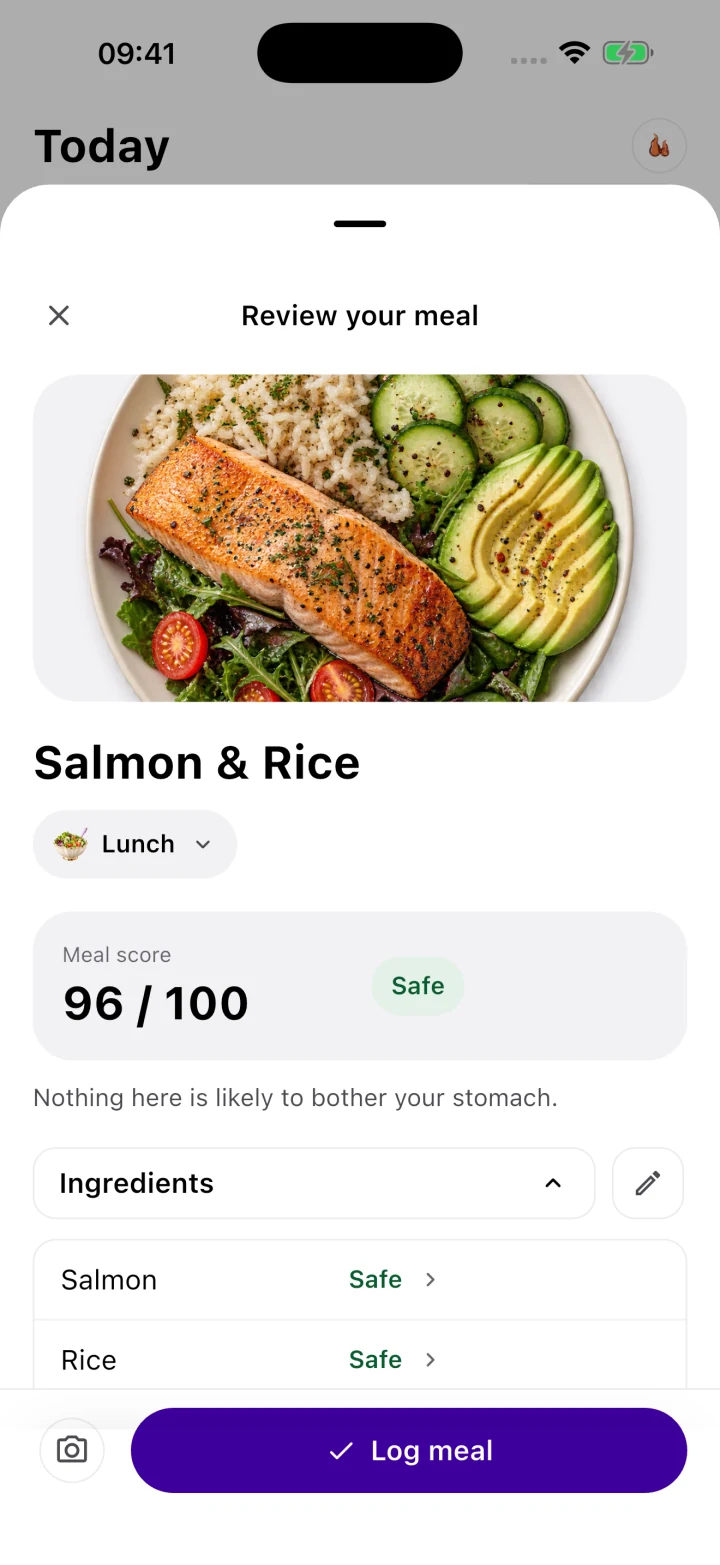
At Gutrack, we developed the Gastric Safety Index (GSI), a proprietary 0–100 algorithmic scoring system that evaluates meals across six biomechanical and biochemical axes: total lipid load (CCK stimulation potential), titratable acidity (pH), pepsin activation threshold, osmolarity, mechanical abrasion (insoluble fiber), and soluble colloidal viscosity.
For patients navigating bile reflux and reactive gastropathy, the GSI algorithm heavily penalizes concentrated lipid boluses, fried preparation methods, and LES-relaxing methylxanthines, while rewarding high-viscosity beta-glucan and pectin matrices paired with lean, easily denatured proteins.
- Safe Zone (GSI 70–100): Meals containing $< 6\text{g}$ of total lipids, high concentrations of soluble bile-binding hydrogels, neutral pH, and rapid, non-stagnant gastric clearance.
- Caution Zone (GSI 40–69): Meals with moderate lipid content ($7\text{–}14\text{g}$) or moderate insoluble fiber that require precise portion control and pairing with a starch or mucilage buffer.
- High Risk Zone (GSI 0–39): Meals exceeding $15\text{g}$ of fat, containing oxidized cooking oils, acidic coffee compounds (chlorogenic acids), or chemical sphincter relaxants that guarantee vigorous gallbladder contraction, pyloric incompetence, and alkaline mucosal stripping.
| Meal / Food Item | GSI Score (0–100) | Clinical Zone | Physiological & Biochemical Mechanism in Bile Reflux |
|---|---|---|---|
| Warm Rolled Oats with Psyllium Husk & Steamed Apple | 94 / 100 | Safe | Rich in soluble $\beta$-glucans, arabinoxylans, and pectin. Forms a high-viscosity luminal hydrogel that physically sequesters regurgitated bile salts, preventing phospholipid stripping. Ultra-low lipid content ($< 2.5\text{g}$) triggers virtually zero duodenal I-cell CCK release. |
| Poached Cod (150g) over White Jasmine Rice & Peeled Zucchini | 91 / 100 | Safe | Cod contains $< 1\text{g}$ of total lipid per 100g serving with minimal connective tissue, allowing rapid gastric denaturation and clearance within 90 minutes. Amylopectin starch in white rice absorbs residual biliary fluid in the gastric antrum without delaying pyloric transit. |
| Skinless Chicken Breast Tenderloin with Mashed Boiled Carrots | 86 / 100 | Safe | Provides essential amino acids for mucosal repair with $< 3\text{g}$ of fat. Cooked carrots supply soluble pectin fibers and carotenoids that support gastric prostaglandin synthesis without provoking gallbladder contraction. |
| Egg White Omelet with Spinach & Sourdough Toast (Dry) | 83 / 100 | Safe | Removing the egg yolk eliminates $5\text{g}$ of concentrated lipids and dietary phospholipids per egg, bypassing the CCK signaling cascade entirely while retaining bioavailable albumin protein. Fermented sourdough reduces phytic acid and clears rapidly. |
| Whole Hass Avocado Toast on Multi-Seed Bread with Two Poached Whole Eggs | 48 / 100 | Caution | A classic clinical trap. Despite being nutrient-dense and alkaline, this meal delivers ~32g of long-chain lipids (from the avocado and two egg yolks). This massive lipid bolus induces maximal CCK degranulation, vigorous biliary ejection, and prolonged gastric stasis. |
| Baked Atlantic Salmon Fillet (180g) with Quinoa & Olive Oil Drizzle | 52 / 100 | Caution | While omega-3 fatty acids reduce systemic inflammation, a 180g portion of farmed salmon with olive oil contains 24–28g of fat. In a patient with pyloric incompetence or post-cholecystectomy syndrome, this triggers significant duodenogastric reflux 2 hours post-meal. |
| Almond Butter Smoothie with Chia Seeds, Banana & Oat Milk | 58 / 100 | Caution | Liquids empty faster than solids, but two tablespoons of almond butter plus chia seeds deliver 22g of concentrated lipids. Furthermore, large liquid volumes (> 400 mL) distend the gastric fundus, triggering stretch-activated TLESRs that carry pooled bile into the esophagus. |
| Black Coffee (Fast State) followed by a Butter Croissant | 14 / 100 | High Risk | Chlorogenic acids and caffeine in coffee potently stimulate both gastrin and CCK release while reducing LES resting tone by up to 35%. The 20g of saturated butter fat in the pastry locks the stomach in stasis while alkaline bile and gastric acid mix into a highly cytotoxic refluxate. |
| Pan-Seared Ribeye Steak with Garlic Butter & Fried Potatoes | 08 / 100 | High Risk | Delivers > 45g of saturated and thermally oxidized lipids alongside dense elastin/collagen protein fibers. Gastric emptying is delayed for up to 6 hours; massive biliary secretion overwhelms the duodenum, resulting in severe nocturnal alkaline regurgitation and chemical gastropathy. |
Deep Dive: Why "Healthy Fats" Fail the Bile Reflux Patient
One of the most frequent frustrations we observe among users transitioning to the Gutrack app is the failure of generic "anti-inflammatory" or "Mediterranean" diets to resolve their upper abdominal pain. A patient diagnosed with gastritis is frequently advised by well-meaning nutritionists to consume liberal amounts of extra virgin olive oil, avocados, nuts, seeds, and oily fish to promote cellular healing.
In a patient whose sole pathology is mild acid-induced mucosal irritation with an intact, normotonic pyloric sphincter, modest amounts of olive oil are generally well tolerated. However, if the patient has underlying duodenogastric bile reflux, high intakes of monounsaturated and polyunsaturated fats are biochemically indistinguishable from fast-food fats in terms of hormonal signaling.
Duodenal I-cells express free fatty acid receptors (FFAR1/GPR40 and FFAR4/GPR120) that detect fatty acid chain lengths of 12 carbons or more. Oleic acid ($C18:1$, the primary fatty acid in olive oil and avocados) and alpha-linolenic acid ($C18:3$) bind to these receptors with high affinity, triggering intracellular calcium flux and immediate exocytosis of CCK vesicles.
Consequently, a patient who pours two tablespoons of extra virgin olive oil ($28\text{g}$ lipid) over their steamed vegetables is unknowingly administering a potent pharmacological stimulus to their biliary tract. By scanning that exact meal inside Gutrack, the algorithm immediately flags the lipid density, outputs a Caution/High Risk GSI score of 42, and recommends reducing the added oil to ½ teaspoon ($2.2\text{g}$ lipid) while adding 100g of soluble-fiber-rich white sweet potato to raise the meal's GSI score to a mucosal-safe 88.
Step-by-Step Clinical Protocol for Bile Reflux Stabilization
Recovering from bile reflux gastritis and esophagitis requires a structured mechanical and nutritional intervention designed to keep bile moving forward (aborally) toward the ileum—where 95% of bile salts are physiologically reabsorbed via the enterohepatic circulation—rather than washing backward into the stomach.
Phase 1: Mechanical & Postural Engineering
- Strict Volumetric Grazing (5-Meal Architecture): An overdistended stomach mechanically pulls open the lower esophageal sphincter and disrupts antroduodenal pressure gradients. Replace three large meals with five small, uniform feedings spaced every 3 hours. Cap total meal volume at approximately 300 to 350 grams (roughly the size of a single cupped palm and a half).
- Hydro-Separation (Liquid-Solid Decoupling): Drinking 500 mL of water alongside a solid meal turns the gastric contents into a low-viscosity soup. When duodenal bile leaks across the pylorus, a liquid-filled stomach allows that alkaline detergent to slosh effortlessly up to the gastroesophageal junction. Consume fluids at least 30 minutes before or 60 minutes after solid meals; take only small sips (50–80 mL total) during the meal itself.
- Inclined Gravitational Drainage (15–20 cm Elevation): Bile reflux is notoriously destructive during REM sleep, when swallowing ceases, salivary bicarbonate production drops to zero, and autonomic vagal tone alters sphincter pressures. Stacking pillows bends the patient at the waist, increasing intra-abdominal pressure and forcing duodenal contents into the stomach. Instead, elevate the head of the bed frame using 6-to-8-inch (15–20 cm) blocks, or utilize a full-torso inclined wedge pillow, sleeping preferentially on the left lateral decubitus side (which positions the gastroesophageal junction anatomically above the pool of gastric fluid).
Phase 2: Strategic Mucilage Pre-Loading & Post-Meal Binding
For patients without gallbladder reservoirs (post-cholecystectomy) whose livers drip bile continuously into the duodenum, fasting periods are high-risk windows. Leaving the stomach completely empty for 6 hours during the day allows concentrated, unbuffered bile to pool directly against the antral mucosa.
- The Morning Sequestration Sponge: Upon waking, before consuming any other food, consume a small portion of warm rolled oat porridge made with water, or 1 teaspoon of pure, unflavored psyllium husk powder whisked into 150 mL of warm water followed immediately by two plain rice cakes. This sweeps up and binds any nocturnal bile that pooled in the stomach overnight, carrying it safely past the duodenum.
- The Nocturnal Buffer: Finish the final meal of the day at least 3.5 to 4 hours before lying down. If midnight or early-morning burning persists due to continuous hepatic bile trickle, discuss with your gastroenterologist the targeted use of a bedtime mucosal protectant (such as 1g liquid sucralfate suspension or an alginate-antacid raft formulation) or a small, zero-fat soluble fiber binder (such as a small bowl of plain white rice congee or steamed apple puree) 2 hours before sleep.
Phase 3: Navigating the PPI Conversation with Your Physician
If you suspect your refractory symptoms are driven by bile reflux rather than acid reflux, never abruptly discontinue a high-dose PPI on your own. Prolonged PPI therapy suppresses gastric acid, which removes the natural brake on G-cells in the gastric antrum, causing them to overproduce the hormone gastrin (secondary hypergastrinemia). Gastrin stimulates the proliferation of histamine-producing enterochromaffin-like (ECL) cells.
If you stop a PPI cold turkey, this expanded population of ECL cells unleashes a massive surge of histamine, resulting in Rebound Acid Hypersecretion (RAHS) within 7 to 14 days. You will suddenly experience severe, scorching acid reflux layered on top of your existing bile reflux, causing acute erosive injury.
Instead, partner with your gastroenterologist to evaluate objective diagnostic testing—such as 24-hour ambulatory multichannel intraluminal impedance-pH monitoring (MII-pH) or Bilitec spectrophotometric bilirubin monitoring, which detects reflux episodes across all pH levels (acid, weakly acidic, and alkaline)—and discuss a gradual, physiological PPI step-down protocol combined with targeted bile-binding therapy (such as ursodeoxycholic acid, low-dose cholestyramine, or prokinetics that strengthen antroduodenal coordination).
Preparing an Objective Log for Your Gastroenterologist
A standard 15-minute gastroenterology consultation is rarely long enough to untangle the complex interplay between delayed lipid transit, surgical history, medication timing, and non-acid reflux. When a patient walks into an appointment and says, "My omeprazole isn't working, my stomach burns all the time, and even healthy foods hurt me," the clinician lacks the granular data needed to differentiate functional dyspepsia or visceral hypersensitivity from true chemical bile gastropathy.
Handwritten food diaries almost always fail in this scenario because they lack biochemical quantification. Writing down "Chicken salad for lunch, pain at 4 PM" does not tell the physician whether that salad contained 4 grams of fat or 38 grams of fat from dressing and nuts, nor does it account for the cumulative mucosal load of the preceding 48 hours.
How Gutrack Transforms Clinical Consultations
Gutrack (gutrack.com) was engineered specifically to bridge the gap between daily patient experience and clinical gastroenterology. Instead of forcing you to guess which ingredient in a complex meal triggered a flare-up hours later, Gutrack automates the biochemical analysis:
- Instant GSI Meal Scanning: Before or after eating, simply log or scan your meal in the iOS app. Gutrack immediately calculates the 0–100 Gastric Safety Index score, breaking down the exact lipid load (CCK trigger potential), acidity profile, fiber solubility ratio, and estimated gastric emptying duration. You can spot a hidden 22-gram fat trap before it triggers a 4-hour gallbladder contraction cascade.
- Delayed Temporal Symptom Mapping: Because bile reflux pain often peaks 2 to 4 hours postprandially (as duodenal retro-peristalsis peaks) or between 1:00 AM and 4:00 AM, Gutrack correlates your timestamped symptom severity ratings (epigastric burning, bitter taste, nausea, retrosternal pain) against the pharmacokinetic and digestive curves of your previous meals.
- 14-Day Objective Clinical PDF Export: Prior to your endoscopy or follow-up consultation, generate a clean, one-click 14-Day Clinical Summary PDF directly from Gutrack. This report presents your gastroenterologist with hard, actionable metrics: your rolling average GSI score, exact correlation coefficients between meals exceeding 10g of lipids and subsequent nocturnal pain spikes, and documented medication adherence showing persistent symptoms despite consistent PPI dosing.
When you hand a gastroenterologist an objective data sheet demonstrating that your pain correlates at an $r > 0.80$ rate with meals scoring below 55 on the Gastric Safety Index due to lipid-induced CCK delays—while acid-suppressing PPIs show zero symptom modulation—the diagnostic conversation shifts immediately from generic acid-blocker dose escalation to targeted duodenal and biliary management.
Frequently Asked Questions on Bile Reflux
What does bile reflux taste like compared to acid reflux?
Acid reflux produces a sharp, sour, citrus-like taste in the back of the throat due to hydrogen ions and active pepsin at a pH below 4.0. Bile reflux causes a persistent, intensely bitter, medicinal, or metallic taste accompanied by yellowish-green regurgitated fluid with an alkaline pH between 7.5 and 8.5.
Why don't PPIs (omeprazole) work for bile reflux?
Proton pump inhibitors like omeprazole irreversibly block the $H^+/K^+$ ATPase enzyme in gastric parietal cells, reducing stomach acid secretion by up to 90%. Because bile is synthesized in the liver and stored in the gallbladder, acid blockers do not reduce bile volume, neutralize detergent bile salts, or prevent backward flow through an incompetent pyloric sphincter.
What causes bile to back up into the stomach?
Bile reflux is primarily caused by pyloric sphincter dysfunction, duodenal motility disorders, or structural changes following cholecystectomy (gallbladder removal) or gastric surgery. Clinical studies indicate that up to 50% of post-cholecystectomy patients experience measurable duodenogastric reflux due to the continuous, unregulated trickle of hepatic bile into the duodenum.
Can bile reflux cause severe gastritis and esophageal damage?
Yes. Unconjugated and secondary bile salts act as biological detergents that dissolve the protective phospholipid layer of the stomach lining, causing chemical reactive gastropathy. When mixed with gastric acid and pancreatic enzymes, bile acids penetrate esophageal epithelial cells, causing intracellular acidification and significantly increasing the risk of Barrett's esophagus and mucosal ulceration.
Self-tracking tool, not clinical diagnosis
Gutrack provides evidence-based Gastric Safety Index estimates for daily self-management and diet optimization. It does not replace medical consultation, endoscopy, or treatment prescribed by a qualified gastroenterologist.
Frequently asked questions
What does bile reflux taste like compared to acid reflux?
Acid reflux produces a sharp, sour, citrus-like taste in the back of the throat due to hydrogen ions and active pepsin at a pH below 4.0. Bile reflux causes a persistent, intensely bitter, metallic taste accompanied by yellowish-green regurgitated fluid with an alkaline pH between 7.5 and 8.5.
Why don't PPIs (omeprazole) work for bile reflux?
Proton pump inhibitors like omeprazole irreversible block the H+/K+ ATPase enzyme in gastric parietal cells, reducing stomach acid secretion by up to 90%. Because bile is synthesized in the liver and stored in the gallbladder, acid blockers do not reduce bile volume, neutralize bile salts, or prevent backward flow through an incompetent pyloric sphincter.
What causes bile to back up into the stomach?
Bile reflux is primarily caused by pyloric sphincter dysfunction, duodenal motility disorders, or structural changes following cholecystectomy (gallbladder removal) or gastric bypass surgery. Studies indicate that up to 50% of post-cholecystectomy patients experience measurable duodenogastric reflux due to the continuous trickle of hepatic bile into the duodenum.
Can bile reflux cause severe gastritis and esophageal damage?
Yes, unconjugated bile salts act as biological detergents that dissolve the protective phospholipid layer of the stomach lining, causing chemical reactive gastropathy. When mixed with gastric acid and pepsin, bile acids penetrate esophageal epithelial cells, significantly increasing the risk of Barrett's esophagus and mucosal ulceration.
Sources & background reading
Background sources for definitions, diagnosis and treatment. Food scores are estimates, not clinical targets. See our editorial standards.
Clinical Evidence & Scientific References
- Dixon MF, et al. Reflux gastritis: distinct histopathological entity? J Clin Pathol. 1986;39(5):524-530.
- Sifrim D. Relevance of non-acid reflux: Duodenogastroesophageal reflux. Gut. 2005;54(2):175-178.
- Kauer WK, et al. Composition and concentration of bile acid reflux in patients with complicated GERD. Surgery. 1997;122(5):874-881.
This article is for educational purposes only and isn't a substitute for professional medical advice, diagnosis, or treatment. Gutrack is a self-tracking tool, not a medical device. If you're experiencing persistent or concerning symptoms, talk to a doctor.