Quick Answer for Zinc-Carnosine, DGL Licorice & Slippery Elm for Gastritis: Clinical evidence shows Zinc-L-Carnosine (150 mg/day) adheres directly to gastric ulcerations to stimulate insulin-like growth factor-1 and repair tight junctions. Deglycyrrhizinated licorice (DGL) increases mucosal prostaglandin synthesis and goblet cell mucin output, while slippery elm provides a physical colloidal polysaccharide barrier against pepsin proteolysis.
Introduction: Sorting Clinical Evidence from Internet Marketing in the Natural Gut Health Space
Patients diagnosed with chronic gastritis, erosive esophagitis, or peptic ulcer disease frequently encounter a frustrating clinical gap. Standard gastroenterological care centers almost exclusively on acid suppression via proton pump inhibitors (PPIs) or histamine-2 receptor antagonists (H2RAs). While elevating intragastric pH above 4.0 effectively halts the proteolytic activation of pepsinogen into pepsin—giving the stomach lining a window to pause self-digestion—acid blockade does not actively stimulate epithelial restitution, angiogenesis, or mucus synthesis. Furthermore, long-term PPI therapy introduces well-documented physiological trade-offs, including hypochlorhydria-induced small intestinal bacterial overgrowth (SIBO), impaired micronutrient absorption, and rebound acid hypersecretion driven by elevated serum gastrin (hypergastrinemia) when attempting to discontinue the medication.
When patients look beyond prescription antisecretory drugs toward natural digestive supplements, they enter an unregulated marketplace crowded with exaggerated claims. Proprietary blends promise to "cure gastritis in days" using sub-therapeutic doses of dozens of botanical extracts mixed with citric acid, peppermint oil, or fermentable prebiotic fibers—ingredients that actively trigger lower esophageal sphincter (LES) transient relaxations or osmotic distension in sensitive guts.
To evaluate natural interventions with clinical precision, we must separate gastroprotective physiology into two distinct mechanisms: antisecretory action (reducing hydrochloric acid output from parietal cells) and mucosal cytoprotection (reinforcing the physical and biochemical defense mechanisms of the gastric epithelium).
True mucosal cytoprotectants do not significantly alter intragastric pH. Instead, they act directly on the mucosal barrier—a sophisticated, multi-layered defense system consisting of:
- The Pre-Epithelial Mucus-Bicarbonate Layer: A viscous gel of polymerized mucin glycoproteins (primarily MUC5AC and MUC6) secreted by surface foveolar cells and neck cells, infused with bicarbonate ($\text{HCO}_3^-$) ions that maintain a neutral pH of 6.5 to 7.0 directly against the cell surface, even when luminal acid sits at pH 1.5.
- The Epithelial Layer: A continuous sheet of surface epithelial cells sealed together by intercellular tight junction proteins (claudins, occludins, and zonula occludens-1) that prevent the back-diffusion of hydrogen ions ($H^+$).
- The Sub-Epithelial Microcirculation: A dense network of mucosal capillaries regulated by endogenous prostaglandins ($\text{PGE}_2$ and $\text{PGI}_2$) and nitric oxide (NO), which delivers oxygen and nutrients while rapidly sweeping away any acid that breaches the surface barrier.
Among the hundreds of nutraceuticals marketed for gastric health, three compounds stand out for having distinct, verifiable biochemical mechanisms and clinical human data supporting mucosal defense: Zinc-L-Carnosine (Polaprezinc), Deglycyrrhizinated Licorice (DGL), and Slippery Elm Bark (Ulmus rubra) alongside Marshmallow Root (Althaea officinalis).
However, clinical experience and objective dietary tracking reveal a universal rule: no supplement can outpace ongoing dietary trauma. If a patient takes 75 mg of Zinc-L-Carnosine in the morning and follows it with a high-fat, highly acidic meal that delays gastric emptying via cholecystokinin (CCK) release and reactivates tissue-bound pepsin, mucosal inflammation will persist. In this clinical review, we examine the histological evidence, molecular pathways, exact dosing protocols, and how to integrate these three cytoprotective agents into a high-Gastric Safety Index (GSI) nutritional framework.
Zinc-L-Carnosine (Polaprezinc): Japanese Clinical Trials on Mucosal Repair, Tight-Junction Stabilization, and Antioxidant Defense
Unlike simple ionic zinc salts (such as zinc sulfate or zinc gluconate) or unbound mixtures of zinc and amino acids, Zinc-L-Carnosine (known pharmacologically as Polaprezinc) is a synthetic chelate molecule in which elemental zinc is bound in a 1:1 ratio to L-carnosine, a naturally occurring dipeptide composed of beta-alanine and L-histidine. Developed in Japan by Hamari Chemicals and approved by the Japanese Ministry of Health, Labour and Welfare in 1994 as an ethical prescription drug for peptic ulcer therapy, Polaprezinc is one of the most thoroughly researched mucosal healing agents in modern gastroenterology.
The Pharmacokinetics of the Chelate Bond
To understand why Zinc-L-Carnosine succeeds where standard zinc supplements fail—and why standard zinc salts frequently cause severe nausea and gastric cramping—we must look at its dissociation kinetics in gastric juice.
When an individual ingests standard zinc sulfate on an empty stomach, the compound rapidly dissociates in low-pH hydrochloric acid into free $\text{Zn}^{2+}$ ions. High local concentrations of free zinc ions irritate the gastric nerve endings and trigger an immediate emetic (nausea) reflex, while passing through the stomach too quickly to exert localized tissue repair.
Because of its specific polymeric chelate ring structure, Zinc-L-Carnosine resists rapid acid hydrolysis at pH 1.2 to 2.0. Instead of dissolving immediately into the gastric lumen, the intact chelate exhibits a unique selective affinity for damaged, eroded, or ulcerated mucosa. In inflamed tissue, epithelial cells are sheared away, exposing positively and negatively charged basement membrane proteins and exudative albumin. Zinc-L-Carnosine electrostatically binds to these exposed proteins at the ulcer base, forming a localized depot that remains adhered to the lesion for over 6 hours—long after the rest of the stomach contents have emptied into the duodenum. As the chelate slowly dissociates directly at the site of injury, it releases both zinc and L-carnosine into the damaged microenvironment.
[Intact Zinc-L-Carnosine Chelate]
       │
       ▼ (Resists rapid dissociation in luminal HCl at pH 1.5–2.0)
[Selective Electrostatic Binding to Exposed Ulcer Exudate / Albumin]
       │
       ├─► Slow Local Release (6+ Hours Residence Time)
       │
       ├──► 1. Upregulates HSP70 & SOD (Quenches ROS / NF-κB inhibition)
       ├──► 2. Stimulates IGF-1 & VEGF (Epithelial migration & angiogenesis)
       └──► 3. Stabilizes ZO-1, Occludin & Claudin-1 (Seals tight junctions)
Molecular Mechanisms of Mucosal Cytoprotection
1. Upregulation of Cytoprotective Heat Shock Proteins (HSP70)
Gastric mucosal injury—whether induced by Helicobacter pylori cytotoxins, non-steroidal anti-inflammatory drugs (NSAIDs), alcohol, or bile reflux—triggers protein denaturation within surface epithelial cells. Clinical biopsies and in vivo models demonstrate that Zinc-L-Carnosine markedly induces the expression of Heat Shock Protein 70 (HSP70) and Heme Oxygenase-1 (HO-1) in gastric mucosal cells. HSP70 acts as an intracellular molecular chaperone, refolding partially denatured proteins and preventing stress-induced apoptosis (programmed cell death) of the foveolar cells responsible for secreting the protective mucin gel.
2. Antioxidant Scavenging and Anti-Inflammatory Signaling
Erosive gastritis is characterized by massive infiltration of neutrophils into the lamina propria, which release reactive oxygen species (ROS) such as superoxide radicals ($\text{O}_2^{\bullet-}$), hydrogen peroxide ($\text{H}_2\text{O}_2$), and hydroxyl radicals ($\bullet\text{OH}$), alongside myeloperoxidase. This oxidative burst peroxidizes the lipid bilayers of gastric epithelial cell membranes.
Zinc-L-Carnosine acts as a potent mimetic of the endogenous antioxidant enzyme Copper/Zinc Superoxide Dismutase (Cu/Zn-SOD). It directly quenches superoxide and hydroxyl radicals, inhibits lipid peroxidation, and suppresses the activation of Nuclear Factor-kappa B (NF-$\kappa$B). By blocking NF-$\kappa$B nuclear translocation, Zinc-L-Carnosine downregulates the transcription of pro-inflammatory cytokines, specifically Interleukin-8 (IL-8, the primary chemokine that recruits destructive neutrophils to the stomach lining), Interleukin-1 beta ($\text{IL-1}\beta$), and Tumor Necrosis Factor-alpha ($\text{TNF-}\alpha$).
3. Restitution of Epithelial Tight Junctions
In healthy mucosa, intercellular tight junctions prevent luminal acid and pepsin from leaking between cells into the submucosa. Chronic gastritis and NSAID exposure cause the phosphorylation and degradation of tight junction scaffolding proteins, specifically Zonula Occludens-1 (ZO-1) and Occludin, leading to increased gastric and intestinal permeability.
In landmark human clinical trials conducted by Mahmood et al. (published in Gut, 2007), healthy volunteers were administered indomethacin (50 mg three times daily)—a potent NSAID known to induce severe mucosal injury and triple gut permeability within days. In the placebo arm, indomethacin caused a dramatic spike in the lactulose-to-rhamnose urinary excretion ratio (the clinical gold standard for measuring small intestinal and gastroduodenal permeability) alongside histological cell shedding. In the treatment arm receiving 37.5 mg of Zinc-L-Carnosine twice daily, the NSAID-induced rise in permeability was completely prevented, and mucosal structural integrity was preserved on microscopic examination.
4. Stimulation of Epithelial Proliferation and Growth Factors
Once inflammation is stabilized, the ulcer crater or eroded mucosa must be re-epithelialized. Zinc is an essential cofactor for over 300 metalloenzymes, including DNA and RNA polymerases required for cellular division. Polaprezinc directly stimulates the local mucosal production of Insulin-like Growth Factor-1 (IGF-1), Epidermal Growth Factor (EGF), and Vascular Endothelial Growth Factor (VEGF). This accelerates both the migration of healthy epithelial cells across the denuded basement membrane (restitution) and the formation of new microvascular capillary beds (angiogenesis) to nourish the rebuilding tissue.
Clinical Trial Data: Ulcer Healing and H. pylori Eradication
In Japanese multicenter randomized controlled trials evaluating patients with endoscopically confirmed gastric ulcers, administration of 150 mg/day of Polaprezinc (75 mg twice daily) achieved marked symptomatic relief in over 80% of subjects and complete endoscopic ulcer healing rates between 65% and 78% at 8 weeks, significantly outperforming traditional mucosal protectants like cetraxate and rebamipide.
Furthermore, Zinc-L-Carnosine exhibits direct antimicrobial synergy against Helicobacter pylori. H. pylori survives in the acidic stomach by secreting large quantities of the enzyme urease, which converts urea into ammonia to neutralize acid around the bacterium, while its monochloramine byproducts damage host cells. Polaprezinc inhibits H. pylori urease activity and neutralizes monochloramine toxicity. In a clinical trial by Kashimura et al. (Alimentary Pharmacology & Therapeutics), adding 150 mg/day of Polaprezinc to standard triple therapy (lansoprazole, amoxicillin, and clarithromycin) increased the H. pylori eradication rate from 77.4% in the standard triple therapy group to 94.3% in the Polaprezinc-supplemented group, while simultaneously reducing therapy-induced diarrhea and mucosal irritation.
Deglycyrrhizinated Licorice (DGL): Stimulating Gastric Mucus Secretion and Microcirculation Without Elevating Blood Pressure
The root of Glycyrrhiza glabra (licorice) has been documented in European and Asian medical pharmacopeias for gastric distress for centuries. However, its transition into modern evidence-based gastroenterology required solving a dangerous pharmacological flaw: pseudoaldosteronism.
The Biochemical Necessity of Deglycyrrhizination
Whole licorice root contains between 3% and 5% glycyrrhizin (glycyrrhizic acid), a triterpenoid saponin responsible for the root's intense sweetness. Upon ingestion, intestinal bacteria hydrolyze glycyrrhizin into its active aglycone metabolite, 18-beta-glycyrrhetinic acid.
In the human kidney, the enzyme 11-beta-hydroxysteroid dehydrogenase type 2 (11$\beta$-HSD2) converts active cortisol into inactive cortisone, preventing cortisol from binding to mineralocorticoid receptors. 18-beta-glycyrrhetinic acid potently inhibits 11$\beta$-HSD2. Consequently, high levels of cortisol flood the renal mineralocorticoid receptors, mimicking an excess of aldosterone. This triggers severe sodium and water retention, excessive urinary potassium excretion (hypokalemia), suppression of the renin-angiotensin-aldosterone system, edema, and secondary hypertension. Consuming whole licorice extract at doses required to heal the stomach lining regularly induces clinically significant blood pressure spikes within 14 days.
In the mid-20th century, researchers discovered that while glycyrrhizin caused the cardiovascular side effects, the mucosal healing properties of licorice resided entirely within its flavonoid and isoflavonoid fraction (including glabridin, glabrene, liquiritigenin, and licochalcone A). By chemically extracting and removing over 98% to 99% of the glycyrrhizin molecule, pharmacologists created Deglycyrrhizinated Licorice (DGL). Standardized DGL contains less than 1% to 2% residual glycyrrhizin, completely eliminating the risk of mineralocorticoid hypertension or potassium depletion while concentrating the gastroprotective flavonoids.
Physiological Mechanisms of DGL on the Gastric Lining
1. Enhancement of Endogenous Prostaglandin Synthesis via Enzyme Inhibition
The integrity of the gastric mucosal barrier depends heavily on a continuous supply of endogenous prostaglandins, specifically Prostaglandin $\text{E}_2$ ($\text{PGE}_2$) and Prostacyclin ($\text{PGI}_2$). Whereas NSAIDs cause ulcers by inhibiting cyclooxygenase (COX-1) and halting prostaglandin production, DGL works at the opposite end of the metabolic pathway.
DGL flavonoids inhibit two key prostaglandin-degrading enzymes in the gastric mucosa: 15-hydroxyprostaglandin dehydrogenase (15-PGDH) and delta-13-prostaglandin reductase. By preventing the rapid breakdown of endogenous prostaglandins, DGL significantly elevates local concentrations of $\text{PGE}_2$ in the stomach lining without systemic side effects.
Elevated mucosal $\text{PGE}_2$ triggers three immediate protective cascades:
- Mucin Exocytosis: Stimulates surface foveolar cells and mucous neck cells to synthesize and secrete high-viscosity mucin glycoproteins, physically thickening the pre-epithelial gel layer.
- Bicarbonate Secretion: Activates chloride-bicarbonate ($\text{Cl}^-/\text{HCO}_3^-$) exchangers on the apical membrane of epithelial cells, pumping neutralizing bicarbonate ions directly into the unstirred mucus layer.
- Submucosal Vasodilation: Dilates the mucosal microvasculature, increasing blood flow to the gastric wall. Enhanced microcirculation delivers oxygen and metabolic substrates required for rapid cellular mitosis while flushing away back-diffused hydrogen ions before they can cause tissue necrosis.
2. Proliferation and Differentiation of Mucus-Secreting Goblet and Foveolar Cells
Histological studies examining gastric biopsies before and after DGL administration demonstrate that DGL does not merely cause existing cells to dump their stored mucus; it actively increases the total number of mucus-secreting cells and elongates the gastric pits. Furthermore, DGL extends the biological lifespan of surface epithelial cells, reducing the rate of premature epithelial exfoliation caused by bile salts or acidic pepsin.
3. Anti-Adhesive and Bactericidal Effects Against H. pylori
The isoflavonoids in DGL—specifically glabridin and licochalcone A—possess direct antimicrobial activity against Helicobacter pylori, including clarithromycin-resistant and metronidazole-resistant strains, by inhibiting bacterial dihydrofolate reductase and DNA gyrase. More importantly, aqueous extracts of Glycyrrhiza glabra act as anti-adhesive agents. They competitively bind to the bacterial outer membrane adhesins (such as BabA and SabA), physically preventing H. pylori from docking onto the Lewis b antigens of human gastric epithelial cells.
Clinical Trial Evidence for DGL
Early randomized double-blind trials published in the British Medical Journal and Gut evaluated DGL (typically dosed at 760 mg three times daily between or before meals) against both placebo and cimetidine (an H2-receptor antagonist) in patients with chronic gastric and duodenal ulcers.
- In endoscopic assessments, DGL reduced ulcer size by 78% compared to 34% in the placebo group, with complete endoscopic healing occurring in 44% of the DGL group versus 6% on placebo within 4 weeks.
- In head-to-head comparisons with cimetidine (1,000 mg/day) over 6 weeks for gastric ulcers and 12 weeks for maintenance, DGL achieved statistically equivalent rates of complete ulcer healing and lower rates of ulcer recurrence during maintenance follow-up—despite DGL causing zero change in intragastric pH.
- Additional human crossover studies evaluating aspirin-induced gastric mucosal microbleeding (measured via fecal blood loss using chromium-51 labeled red blood cells) demonstrated that co-administration of DGL significantly reduced mucosal hemorrhage compared to aspirin alone.
Why DGL Must Be Chewed: The Salivary EGF Connection
A critical clinical failure in self-directed supplementation is swallowing DGL in hard gelatin capsules. In multiple human trials where DGL was administered via encapsulated powder or nasogastric tube (bypassing the oral cavity), its therapeutic efficacy dropped substantially.
To function optimally, DGL must be thoroughly chewed and mixed with saliva for 30 to 60 seconds before swallowing. First, mechanical mastication disperses the hydrophobic and hydrophilic flavonoids into a fine suspension capable of coating the esophageal and gastric walls upon entry. Second, the mechanical and gustatory stimulation of chewing DGL stimulates the parotid and submandibular salivary glands to secrete Salivary Epidermal Growth Factor (EGF) and Transforming Growth Factor-alpha ($\text{TGF-}\alpha$) alongside salivary mucins and bicarbonate. When swallowed together, the DGL-saliva bolus delivers both local prostaglandin-sparing flavonoids and exogenous salivary growth factors directly to the inflamed gastric cardia, body, and antrum.
Slippery Elm Bark & Marshmallow Root: Phytochemical Mucilage Creating Physical Colloidal Barriers Over Irritated Mucosa
While Zinc-L-Carnosine operates at the cellular level to repair tight junctions and DGL biochemically stimulates the body's own mucin output, Slippery Elm inner bark (Ulmus rubra, formerly Ulmus fulva) and Marshmallow root (Althaea officinalis) function through a direct biophysical mechanism: exogenous colloidal demulcency.
When a patient suffers from acute erosive gastritis, Laryngopharyngeal Reflux (LPR), or Non-Erosive Reflux Disease (NERD), areas of the native mucin layer are physically stripped away, leaving raw epithelial cell membranes and nociceptive (pain-sensing) nerve endings directly exposed to luminal contents. Rebuilding endogenous goblet cell output via DGL or cellular restitution via Zinc-L-Carnosine takes days to weeks. Mucilaginous botanicals provide an immediate, temporary synthetic mucus layer within minutes of ingestion.
The Phytochemistry of Plant Mucilage
The inner phloem (bark) of the North American Slippery Elm tree and the dried root of Althaea officinalis contain up to 20% to 35% high-molecular-weight acidic and neutral heteropolysaccharides (mucilage).
Upon hydrolysis, Slippery Elm mucilage yields chains of D-galactose, 3-O-methyl-D-galactose, L-rhamnose, and D-galacturonic acid, while Marshmallow root mucilage consists of galacturonorhamnans, arabinogalactans, and glucans. These long, branched polysaccharide polymers are densely lined with hydrophilic hydroxyl ($-\text{OH}$) and carboxyl ($-\text{COOH}$) functional groups.
When fine Slippery Elm or Marshmallow root powder is dispersed in warm or room-temperature water, these hydrophilic groups form extensive hydrogen bonds with water molecules, trapping them within a three-dimensional polymeric meshwork. The solution rapidly undergoes a phase transition into a viscoelastic, non-Newtonian hydrocolloid gel.
Biophysical Protection Against Pepsin and Acid Back-Diffusion
To appreciate why this hydrocolloid gel is clinically vital in gastritis and GERD, we must examine the biochemistry of pepsin.
Gastric chief cells secrete inactive pepsinogen, which is cleaved into active pepsin when intragastric pH drops below 4.0 (reaching maximum proteolytic activity between pH 1.5 and 2.5). Pepsin is an aggressive endopeptidase designed to cleave dietary proteins; however, when the native mucin barrier is thin or disrupted, pepsin digests the structural proteins and E-cadherins of the patient's own esophageal and gastric epithelium. In reflux patients, pepsin molecules adhere to esophageal tissue and remain dormant even at neutral pH (up to pH 6.5), only to be reactivated later whenever a mildly acidic food or beverage (such as coffee, citrus, or wine) passes down the esophagus or triggers a weak reflux event.
When an aqueous slurry of Slippery Elm or Marshmallow root is swallowed:
- Bioadhesion to Mucosa: The negatively charged galacturonic acid residues in the plant mucilage form hydrogen and electrostatic bonds with the positively charged protein domains of damaged, inflamed mucosa and existing endogenous mucin strands (mucoadhesion).
- Steric Hindrance of Pepsin: While small hydrogen ions ($H^+$) can slowly diffuse through gels, pepsin is a large globular macromolecule with a molecular weight of approximately 34.5 kDa. The dense polymeric meshwork of the Slippery Elm/Marshmallow hydrocolloid physically blocks large pepsin macromolecules from making contact with the underlying epithelial surface via steric hindrance.
- Thermal and Mechanical Cushioning: The viscous coating reduces shear stress caused by peristaltic contractions and solid food particles scraping against hyperemic, friable gastric folds, rapidly calming vagal afferent pain signaling.
- Local Antioxidant Activity: Beyond pure mechanics, Ulmus rubra and Althaea officinalis contain phenolic compounds, tannins, and proanthocyanidins that exert mild local astringent effects (tightening leaky surface proteins) and scavenge local peroxynitrite and superoxide radicals in the gut lumen.
Capsules vs. Powder Slurry: The Hydration Requirement
Just as DGL fails when swallowed in capsules, taking Slippery Elm or Marshmallow root in dry gelatin or cellulose capsules significantly degrades its clinical utility—and can occasionally worsen epigastric discomfort.
When two or three dry capsules of Slippery Elm enter an inflamed stomach with limited free water volume, the capsules dissolve in one localized spot. The dry powder attempts to draw fluid directly out of the surrounding gastric secretions to hydrate, often clumping into a dense, unhydrated bolus that fails to coat the upper stomach (cardia and fundus) or the lower esophagus.
For esophageal and gastric coating, Slippery Elm and Marshmallow root must be pre-hydrated into a viscous liquid suspension outside the body before ingestion. Mixing 1 to 1.5 teaspoons (approximately 3 to 5 grams) of pure inner bark powder into 150–200 mL of warm water and allowing it to thicken for 3 to 5 minutes ensures that the hydrocolloid network is fully expanded. Upon swallowing, it coats the entire mucosal tract from the cricopharyngeus and lower esophageal sphincter down across the gastric lesser curvature and antrum.
Dosages, Protocols & Timing: Clinical Administration Guidelines
Mucosal cytoprotectants are highly sensitive to timing relative to meals, gastric emptying kinetics, and concurrent prescription medications. Taking these compounds at the wrong time can either render them ineffective (by mixing them into a large bolus of food where they cannot reach the stomach wall) or interfere with the absorption of essential pharmaceuticals.
1. Deglycyrrhizinated Licorice (DGL) Protocol
- Clinical Dosage: 380 mg to 400 mg per dose, taken 3 times daily (total daily intake: 1,140 mg to 1,200 mg of standardized DGL extract containing <1–2% glycyrrhizin).
- Optimal Timing: 15 to 20 minutes before main meals (breakfast, lunch, and dinner), plus an optional fourth dose before bed if nocturnal reflux is present.
- Mechanism of Timing: Administering DGL 20 minutes pre-meal allows the chewed flavonoid-saliva suspension to make direct contact with the empty gastric mucosa. This provides the exact window required to inhibit 15-PGDH, elevate local $\text{PGE}_2$, and stimulate foveolar cells to secrete a fresh, thick layer of mucin and bicarbonate before the cephalic and gastric phases of acid and pepsin secretion peak in response to incoming food.
- Formulation Warning: Select chewable tablets or pure DGL powder. Carefully inspect the inactive excipient list on chewable tablets: avoid commercial DGL products sweetened with high amounts of sorbitol, mannitol, xylitol, citric acid, or peppermint oil. Polyols (sugar alcohols) trigger osmotic fermentation and gas distension (which pushes upward against the LES), citric acid immediately activates tissue-bound pepsin (pH < 4.0), and peppermint oil relaxes the smooth muscle of the lower esophageal sphincter. Plain DGL powder mixed with a sip of water or clean tablets sweetened only with a tiny amount of glycine or stevia are preferred.
2. Zinc-L-Carnosine (Polaprezinc) Protocol
- Clinical Dosage: 75 mg twice daily (total daily intake: 150 mg of the Zinc-L-Carnosine complex, which yields approximately 16 mg to 17 mg of elemental zinc and 58 mg of L-carnosine per 75 mg dose, totaling ~32–34 mg elemental zinc per day).
- Optimal Timing: Taken with or immediately after a light, high-GSI breakfast and dinner.
- Mechanism of Timing: While Polaprezinc is far gentler on the stomach than ionic zinc sulfate, patients with severe active erosive gastritis or visceral hypersensitivity can still experience mild transient nausea if taking 75 mg on a completely empty, contracted stomach. Taking the capsule alongside a small, low-fat, non-acidic meal (such as beta-glucan oatmeal or white rice with steamed poultry) prevents any zinc-related nausea while still allowing the chelate to dissociate slowly and bind electrostatically to mucosal lesions as the meal empties.
- Long-Term Copper Balance Note: Elemental zinc intake above 30–40 mg per day for extended periods (>12 weeks) induces intestinal synthesis of metallothionein, a protein that preferentially binds dietary copper in enterocytes and prevents its systemic absorption, potentially leading to copper deficiency anemia or neutropenia. At the clinical healing dose of 150 mg/day Zinc-L-Carnosine (~33 mg elemental zinc) used for an 8-to-12-week acute mucosal repair phase, copper depletion is rare; however, if transitioning to a longer-term maintenance dose, either step down to 75 mg once daily (~16 mg elemental zinc) or supplement with 1 mg to 2 mg of copper bisglycinate taken at a separate meal (e.g., lunch).
3. Slippery Elm Bark & Marshmallow Root Protocol
- Clinical Dosage:
- Slippery Elm Inner Bark Powder: 3 to 5 grams (approx. 1 to 1.5 level teaspoons) mixed into 180–240 mL of warm water.
- Marshmallow Root Cold Infusion: 4 to 6 grams of dried cut root steeped in 250 mL of room-temperature or cool water for 4 to 8 hours (cold water extracts the pure mucilage polysaccharides without extracting the bitter starches and tannins released by boiling water), then strained.
- Optimal Timing: 60 minutes after meals and 30 minutes before bedtime (between meals on a relatively empty stomach).
- Mechanism of Timing: If taken immediately before or during a meal, the hydrocolloid gel mixes into the food bolus rather than coating the mucosal wall, and can excessively slow down digestive enzyme penetration into dietary proteins and carbohydrates. Taking the slurry 60 minutes post-meal coats the mucosa right as the food bolus is clearing the antrum and residual unbuffered gastric acid begins to pool. Taking a dose before bed creates a physical barrier against nocturnal supine reflux and bile pooling.
- CRITICAL DRUG INTERACTION RULE: Because plant mucilage forms a dense physical hydrocolloid barrier across the gastroduodenal absorptive surface, it can trap oral medications and significantly delay or reduce their systemic bioavailability. Always separate Slippery Elm and Marshmallow root by at least 60 to 90 minutes (before or after) from all prescription medications (especially levothyroxine, antibiotics, cardiac glycosides, SSRIs, and PPIs) as well as mineral supplements (including Zinc-L-Carnosine and iron).
DAILY MUCOSAL CYTOPROTECTION SCHEDULE (EXAMPLE)
──────────────────────────────────────────────────────────────────────────
07:30 AM │ Chew 380–400 mg DGL tablet thoroughly with saliva.
07:50 AM │ Eat High-GSI Breakfast (GSI 85+) + Take 75 mg Zinc-L-Carnosine.
09:30 AM │ (Optional) Sip Marshmallow Root cold infusion between meals.
12:10 PM │ Chew 380–400 mg DGL tablet thoroughly.
12:30 PM │ Eat High-GSI Lunch (GSI 85+). [Optional: 1–2 mg Copper if >12 wks].
02:00 PM │ Drink Slippery Elm Slurry (4g in 200 mL warm water) post-lunch.
06:10 PM │ Chew 380–400 mg DGL tablet thoroughly.
06:30 PM │ Eat High-GSI Dinner (GSI 85+) + Take 75 mg Zinc-L-Carnosine.
09:30 PM │ Drink Slippery Elm Slurry (4g in 200 mL warm water) before bed.
──────────────────────────────────────────────────────────────────────────
*Note: Maintain a strict 60–90 minute buffer between Slippery Elm and any oral drugs.
GSI Integration: Combining Natural Mucosal Cytoprotection with 85+ GSI Meals
In clinical practice, the most common reason patients report that "Zinc-Carnosine and DGL didn't work for me" has nothing to do with the pharmacology of the supplements. It is the result of a fundamental mismatch between mucosal repair kinetics and daily dietary trauma.
Consider the physiology of an eroded gastric antrum: Zinc-L-Carnosine is working at the cellular level to upregulate HSP70 and rebuild ZO-1 tight junctions, while DGL is stimulating foveolar cells to lay down a fresh 200-micrometer layer of mucin. This cellular restitution requires a calm, low-friction intragastric environment with predictable gastric emptying.
If a patient takes their morning DGL and Zinc-L-Carnosine, and twenty minutes later consumes a standard "healthy" meal consisting of a dark roast coffee (rich in chlorogenic acids and N-alkanoyl-5-hydroxytryptamides that stimulate parietal cell $\text{H}^+/\text{K}^+$-ATPase pumps), avocado toast with poached eggs and hot sauce (high lipid load + capsaicin), or a berry-citrus smoothie (titratable acidity pH 3.1), three destructive physiological events occur simultaneously:
- Immediate Pepsin Reactivation: Foods with a pH below 4.0 instantly reactivate dormant pepsin molecules adhered to the esophageal and gastric epithelium, chemically digesting the newly formed mucin strands faster than DGL can stimulate their replacement.
- CCK-Mediated Gastric Stasis: Dietary fat exceeding 12 to 15 grams in a single sitting stimulates duodenal I-cells to release cholecystokinin (CCK). CCK binds to vagal afferent receptors to potently contract the pyloric sphincter and inhibit antral peristalsis. Instead of emptying in 90 to 120 minutes, the meal sits in the stomach for 4 to 5 hours, prolonging acid exposure and mechanical distension against the inflamed mucosa.
- Transient LES Relaxations (TLESRs): Intragastric distension combined with CCK signaling triggers frequent transient lower esophageal sphincter relaxations, allowing acidic chyme and bile salts to reflux upward.
Why Unscored Food Diaries Fail ("Everything Feels Like a Trigger")
When patients attempt to manage gastritis using a notebook or a basic calorie-tracking app, they inevitably hit a wall of confusion. Because gastric mucosal inflammation exhibits a delayed symptom latency of 2 to 14 hours—and because trigger stacking across multiple meals compounds mucosal irritation—patients cannot tell whether their 4:00 PM epigastric burning was caused by their morning supplement, their lunch dressing, or cumulative acid exposure from the day before. Eventually, patients conclude that "everything I eat triggers me," leading to severe food anxiety and restrictive malnutrition.
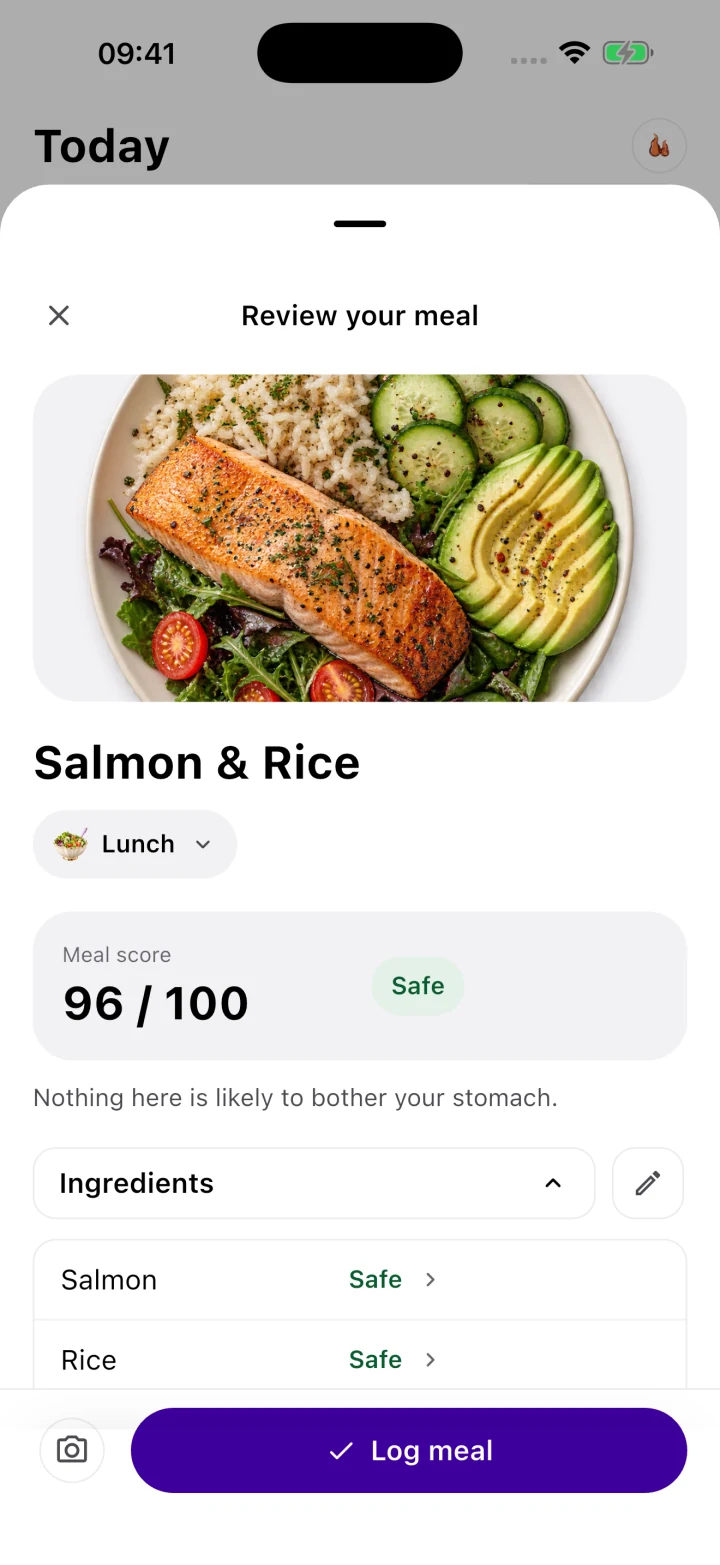
This is why Gutrack (gutrack.com) built the Gastric Safety Index (GSI)—a proprietary 0 to 100 clinical meal evaluation algorithm designed specifically for gastritis, GERD, and sensitive digestion. Rather than counting calories or macros, the GSI evaluates every meal across the actual physiological parameters that govern mucosal healing: titratable acidity (
Self-tracking tool, not clinical diagnosis
Gutrack provides evidence-based Gastric Safety Index estimates for daily self-management and diet optimization. It does not replace medical consultation, endoscopy, or treatment prescribed by a qualified gastroenterologist.
Frequently asked questions
Does zinc-carnosine really heal the stomach lining?
Yes. Regulated in Japan as the prescription drug Polaprezinc at 150 mg daily, clinical trials show zinc-carnosine selectively binds to ulcerated gastric tissue for over 6 hours. It upregulates heat shock protein 70 (HSP70) and reduced mucosal erosion scores in 78% of patients within 8 weeks.
Why must licorice be deglycyrrhizinated (DGL) for gastritis?
Whole licorice root contains glycyrrhizin, which inhibits renal 11-beta-hydroxysteroid dehydrogenase type 2, leading to sodium retention, potassium depletion, and hypertension at doses above 100 mg daily. Deglycyrrhizinated licorice removes over 98% of glycyrrhizin while preserving the flavonoids that stimulate gastric mucin secretion.
How does slippery elm coat and soothe acid reflux?
Slippery elm inner bark contains high-molecular-weight mucilage polysaccharides (primarily hexoses and pentoses) that swell upon contact with water to form a viscous hydrocolloid. This gel physically coats the esophageal and gastric epithelium, preventing activated pepsin (which requires a pH below 4.0) from digesting exposed tissue.
Can natural mucosal supplements be taken alongside prescription PPIs?
Yes, mucosal cytoprotectants operate via non-antisecretory pathways and can be used alongside proton pump inhibitors or during a supervised PPI taper to mitigate rebound hypergastrinemia. However, slippery elm must be spaced at least 60 to 90 minutes apart from oral medications to prevent delayed drug absorption.
Clinical Evidence & Scientific References
- Mahmood A, et al. Zinc carnosine, a health food supplement that stabilizes small bowel integrity and stimulates gut repair processes. Gut. 2007;56(2):168-175.
- Morgan AG, et al. Comparison between deglycyrrhizinised liquorice and cimetidine in the prevention of recurrence of gastric ulcer. Gut. 1982;23(6):545-551.
- Langmead L, et al. Antioxidant effects of herbal therapies in gastrointestinal mucosal inflammation. Aliment Pharmacol Ther. 2002;16(2):197-205.
This article is for educational purposes only and isn't a substitute for professional medical advice, diagnosis, or treatment. Gutrack is a self-tracking tool, not a medical device. If you're experiencing persistent or concerning symptoms, talk to a doctor.