Quick Answer for Apple Cider Vinegar for Gastritis & GERD: The claim that apple cider vinegar cures gastritis is a dangerous physiological myth. With a pH of 2.5 to 3.0, apple cider vinegar introduces unbuffered acetic acid directly onto an inflamed, mucin-depleted stomach lining. This drops intragastric pH below 4.0, activating the proteolytic enzyme pepsin to digest your own exposed gastric tissue.
If you spend more than ten minutes researching natural remedies for heartburn, indigestion, or chronic stomach pain online, you will inevitably encounter the same confident directive: your problem is not too much stomach acid; it is too little.
According to this widely circulated theory, millions of people suffering from gastroesophageal reflux disease (GERD) and chronic gastritis are actually suffering from hypochlorhydria (low stomach acid). The proposed solution is simple, cheap, and ubiquitous: drink one to two tablespoons of raw, unfiltered apple cider vinegar (ACV) diluted in warm water before every meal to "re-acidify" the stomach, trigger the esophageal valve to snap shut, and restore healthy digestion.
In gastroenterology clinics, the fallout from this advice is routine. Patients arrive for consultations or upper endoscopies (esophagogastroduodenoscopies, or EGDs) reporting sudden, severe escalations in epigastric burning, retrosternal chest pain, and early satiety. When we review their dietary logs, the culprit is frequently a morning ritual of apple cider vinegar, lemon water, or over-the-counter betaine HCl capsules started at the recommendation of a wellness forum.
The notion that drinking acid cures acid-mediated mucosal injury is one of the most persistent myths in modern digestive health. It relies on a fundamental confusion between functional indigestion in an intact stomach and chemical erosion in a histologically compromised stomach.
To understand why apple cider vinegar acts like liquid sandpaper on an inflamed stomach lining, we have to look past internet folklore and examine the exact biochemical mechanisms of acetic acid, pepsinogen activation, lower esophageal sphincter mechanics, and the mucosal bicarbonate barrier.
The Origin of the Myth: Conflating Hypochlorhydria with Mucosal Inflammation and Sphincter Incompetence
Every enduring health myth contains a tiny kernel of physiological truth that has been stretched far beyond its clinical boundaries. To dismantle the apple cider vinegar myth, we first need to examine the three core arguments used to promote it—and compare them against actual gastrointestinal physiology.
1. The "Acid-Sensitive Sphincter" Fallacy
The primary argument for taking apple cider vinegar for GERD states that the lower esophageal sphincter (LES)—the ring of smooth muscle separating the esophagus from the stomach—is an acid-sensitive valve. Proponents claim that if the stomach does not produce enough hydrochloric acid (HCl), the LES fails to receive the chemical signal to close tightly, allowing stomach contents to splash upward into the delicate squamous epithelium of the esophagus.
From a physiological standpoint, this is incorrect. The tone and closure of the lower esophageal sphincter are governed primarily by myogenic (intrinsic muscle) tone, cholinergic vagal nerve innervation, and gastrointestinal hormones (such as gastrin and motilin), along with the mechanical support of the crural diaphragm.
In clinical studies utilizing high-resolution esophageal manometry coupled with 24-hour pH-impedance monitoring, over 70% to 80% of acid reflux episodes do not occur because the resting LES pressure is chronically low due to a lack of acid. Instead, they occur during Transient Lower Esophageal Sphincter Relaxations (TLESRs).
TLESRs are brief, neurological drops in sphincter pressure designed to allow gas to vent from the stomach (belching). They are triggered primarily by:
- Gastric fundus distension: Mechanoreceptors in the upper stomach stretch after large meals, high-volume liquids, or carbonated beverages, sending a vagal reflex that opens the LES.
- Delayed gastric emptying: High-fat meals stimulate duodenal I-cells to release cholecystokinin (CCK), a hormone that slows down stomach emptying to allow time for bile and pancreatic lipase to emulsify fats, while simultaneously decreasing resting LES pressure.
- Anatomical disruption: A sliding hiatal hernia separates the intrinsic LES from the external pinch of the crural diaphragm, creating a pocket of acid (the "acid pocket") that sits right above the diaphragm after meals.
Pouring a weak organic acid like vinegar (pH 2.5–3.0) into a stomach whose native parietal cells secrete hydrochloric acid at pH 0.8 to 1.5 does not neurologically tighten a mechanically stretched or hormonally relaxed sphincter. Instead, it simply increases the titratable acidity of the fluid sitting in the postprandial acid pocket—ensuring that when the next TLESR inevitably occurs, the refluxate splashing into the esophagus is even more caustic.
2. Conflating Bloating and Functional Dyspepsia with Low Acid
The second pillar of the myth assumes that because severe hypochlorhydria causes post-meal fullness, bloating, and indigestion, anyone experiencing post-meal fullness, bloating, and indigestion must have low stomach acid.
In medicine, this is a classic diagnostic error. Upper gastrointestinal symptoms are notoriously non-specific. The human visceral nervous system has a limited vocabulary; whether the stomach lining is being eroded by excess acid and pepsin, infected by Helicobacter pylori, experiencing delayed gastric emptying (gastroparesis), or suffering from visceral hypersensitivity (functional dyspepsia), the brain receives the exact same signals: fullness, pressure, nausea, and epigastric ache.
True hypochlorhydria or achlorhydria (the complete absence of stomach acid) does exist, but its clinical footprint is specific and relatively rare in the general population unless specific risk factors are present:
- Autoimmune Atrophic Gastritis: Where antibodies destroy the acid-producing parietal cells in the gastric corpus and fundus.
- Chronic H. pylori Pan-gastritis: Long-standing infection that has progressed over decades to oxyntic gland atrophy and intestinal metaplasia.
- Advanced Age: Basal acid output can decline in a subset of patients over age 65, though mostly in those with underlying atrophic changes.
- Active High-Dose Acid Suppression: Patients currently taking potent Proton Pump Inhibitors (PPIs) or Potassium-Competitive Acid Blockers (PCABs), which intentionally raise intragastric pH above 4.0 to allow mucosal healing.
If a 32-year-old patient develops acute epigastric burning and bloating after a period of high stress, heavy NSAID (ibuprofen/naproxen) use, alcohol consumption, or erratic eating, their parietal cells have not suddenly forgotten how to make hydrochloric acid. Rather, their mucosal defense barrier has been compromised, allowing their completely normal levels of stomach acid to burn the underlying tissue.
3. The Rebound Hypergastrinemia Confusion
Many patients conclude they have low acid because they feel bloated while taking Proton Pump Inhibitors (like omeprazole or pantoprazole), or they experience severe heartburn when they try to stop taking them.
When you take a PPI, it covalently binds to the $\text{H}^+/\text{K}^+$ ATPase pumps on your parietal cells, shutting down acid secretion. In response to the higher stomach pH, the G-cells in the gastric antrum release extra gastrin, a hormone that tries to stimulate acid production. Gastrin has a trophic (growth-stimulating) effect on enterochromaffin-like (ECL) cells, which produce histamine to drive acid secretion.
When a patient abruptly stops a PPI after months of use, those hypertrophied ECL cells flood the stomach with histamine, driving Rebound Acid Hypersecretion (RAHS)—a temporary surge of excess acid that can last from two to eight weeks. Drinking apple cider vinegar during PPI rebound adds exogenous acetic acid right on top of a hyper-stimulated parietal cell mass.
What Acetic Acid (pH 2.5–3.0) Does to Damaged Epithelium
To appreciate why apple cider vinegar triggers such intense pain in gastritis and GERD patients, we must examine the microscopic architecture of the stomach lining and the specific chemistry of acetic acid ($\text{CH}_3\text{COOH}$).
The Intact Mucosal Barrier vs. The Gastritis Barrier
In a healthy stomach, the lumen can hold hydrochloric acid at a pH of 1.5 without digesting the stomach wall itself. This miracle of biological engineering relies on a three-tiered defense system:
- The Pre-Epithelial Mucus-Bicarbonate Layer: Surface foveolar cells secrete a thick, viscoelastic gel of mucin glycoproteins (primarily MUC5AC and MUC6) alongside bicarbonate ions ($\text{HCO}_3^-$). This creates an unstirred water layer with a dramatic pH gradient: while the center of the stomach cavity sits at pH 1.5 to 2.0, the exact surface of the epithelial cells beneath the mucus gel is maintained at a neutral, safe pH of 7.0.
- The Epithelial Tight Junctions: The surface epithelial cells are locked together by intercellular tight junctions and coated with hydrophobic phospholipids, preventing hydrogen ions ($\text{H}^+$) from leaking between the cells (back-diffusion).
- The Sub-Epithelial Microcirculation: A dense network of capillaries in the lamina propria delivers oxygen and nutrients while sweeping away any stray acid molecules that manage to breach the surface. This blood flow and mucus secretion are continuously stimulated by endogenous prostaglandins ($\text{PGE}_2$ and $\text{PGI}_2$).
In a patient with gastritis (whether erosive, non-erosive, chemical/reactive, or H. pylori-induced), this barrier is broken. Endoscopic biopsies of gastritis patients reveal thinned or depleted mucin layers, suppressed prostaglandin synthesis, widened intercellular spaces (spongiosis), and microvascular congestion. The neutral pH 7.0 safety zone at the cell surface is gone. The raw epithelial cells—and in the case of gastric erosions, the underlying lamina propria and nociceptive nerve endings—are directly exposed to whatever enters the stomach.
The Biochemical Trojan Horse: Weak Organic Acid Back-Diffusion
Household and raw apple cider vinegars contain 5% to 6% acetic acid, yielding a solution with a pH between 2.4 and 3.0. Even when diluted (one tablespoon in 8 ounces of water), the pH remains roughly 3.2 to 3.5 because acetic acid acts as a chemical buffer with high titratable acidity.
Many people assume that because stomach acid (hydrochloric acid, pH 1.5) is a "stronger" acid than acetic acid (pH 2.8), drinking vinegar cannot possibly hurt the stomach. Surprisingly, in a damaged mucosa, weak organic acids like acetic acid have a uniquely destructive property known in gastrointestinal physiology as non-ionic back-diffusion (the exact same mechanism by which aspirin, or acetylsalicylic acid, causes stomach ulcers).
Here is how the biochemical Trojan horse works:
- Hydrochloric acid ($\text{HCl}$) is a strong mineral acid that completely dissociates into charged ions ($\text{H}^+$ and $\text{Cl}^-$) in water. Because cell membranes are made of lipid (fat) bilayers, charged ions cannot easily pass straight through the cell wall as long as tight junctions are intact.
- Acetic acid ($\text{CH}_3\text{COOH}$) has a $\text{pK}_a$ of 4.76. This means that in an acidic environment below pH 4.76 (such as the stomach), over 95% of acetic acid exists in its un-ionized, lipid-soluble state.
- When you drink apple cider vinegar and it hits a mucin-depleted gastritis stomach, those uncharged, fat-soluble acetic acid molecules pass right through the lipid cell membranes of your surface gastric epithelial cells with zero resistance.
- Once the acetic acid molecule crosses into the interior cytoplasm of your stomach cell, it encounters a neutral intracellular environment (pH 7.0). At pH 7.0 (well above its $\text{pK}_a$ of 4.76), the acetic acid instantly dissociates into a hydrogen ion ($\text{H}^+$) and an acetate ion ($\text{CH}_3\text{COO}^-$).
- Because these ions are now electrically charged, they are trapped inside the cell ("ion trapping").
The result is rapid intracellular acidification. The trapped ions draw water into the cell via osmosis, causing the epithelial cell to swell, disrupt its mitochondrial energy production, and burst. In laboratory gastroscopy models, high concentrations of acetic acid are literally painted onto the stomach wall of test animals for the express purpose of inducing experimental gastric ulcers. While dietary vinegar is more dilute than laboratory glacial acetic acid, introducing it onto an already eroded human mucosa accelerates cellular sloughing and halts epithelial restitution (the migration of healthy cells to patch microscopic wounds).
The Pepsin Activation Threshold (pH < 4.0)
The damage from apple cider vinegar is not limited to direct acid contact; the real tissue destruction is carried out by pepsin.
Chief cells in the gastric glands secrete an inactive enzyme precursor called pepsinogen. Pepsinogen is harmless to your tissues until it encounters an acidic environment. The biochemical relationship between pH and pepsin activity is strict:
- Above pH 6.0: Pepsin is irreversibly denatured and inactivated.
- Between pH 4.0 and 6.0: Pepsin sits in a dormant, inactive state. It cannot cleave proteins, allowing damaged esophageal and gastric tissue to rebuild.
- Below pH 4.0: Pepsinogen rapidly cleaves itself into active pepsin. Once activated, pepsin aggressively digests protein bonds—and it cannot distinguish between the collagen in a piece of chicken breast and the structural proteins of your own exposed gastric lamina propria or esophageal lining.
This is why every clinical guideline for healing erosive gastritis, peptic ulcer disease, and laryngopharyngeal reflux (LPR) aims to keep intragastric and esophageal pH above 4.0 for as much of the 24-hour cycle as possible.
When a patient with silent reflux (LPR) or gastritis drinks diluted apple cider vinegar (pH 3.2), two catastrophic events happen simultaneously:
- As the vinegar passes down the throat and esophagus, it immediately re-activates any dormant pepsin molecules that are adhered to the pharyngeal and esophageal mucosa from prior reflux episodes. The reactivated pepsin begins digesting the throat and esophagus from the outside in.
- In the stomach, the vinegar ensures the lumen remains firmly locked in the proteolytic danger zone (< pH 4.0), driving continuous autodigestion of inflamed gastric pits.
Neurogenic Inflammation and TRPV1 Activation
Why do some patients feel an immediate, spreading warmth or sharp burning ache within five minutes of swallowing an ACV tonic?
In chronic gastritis and Non-Erosive Reflux Disease (NERD), the widened spaces between epithelial cells expose unmyelinated C-fiber sensory nerves in the mucosa. These nerve fibers are studded with Transient Receptor Potential Vanilloid 1 (TRPV1) ion channels—the exact same receptors triggered by scorching heat and capsaicin (chili peppers).
TRPV1 receptors are directly gated by extracellular protons ($\text{H}^+$) whenever the local tissue pH drops below 5.0. When acetic acid diffuses through a compromised mucosal barrier, it triggers a massive firing of TRPV1 channels. Not only does this send immediate pain signals up the vagus and splanchnic nerves to the brain, but the nerves themselves release Substance P and Calcitonin Gene-Related Peptide (CGRP) directly into the stomach wall. This process, called neurogenic inflammation, dilates local blood vessels, recruits mast cells to release histamine, and sensitizes the stomach so that even a glass of plain water or a bowl of oatmeal later that afternoon feels like a trigger.
When ACV Might Help (Intact Stomachs) vs. When It Is Catastrophic (Active Gastritis & GERD)
To maintain clinical objectivity, we must acknowledge why apple cider vinegar gained popularity in metabolic health research in the first place. Acetic acid is not a poison for every human being; its physiological effect depends entirely on the structural integrity of the gastrointestinal tract receiving it.
When ACV Has Clinical Utility: The Intact Mucosa
In an individual with a thick, intact mucin-bicarbonate barrier, healthy tight junctions, no esophageal sphincter incompetence, and zero mucosal erosions, diluted apple cider vinegar has documented metabolic effects:
- Postprandial Glycemic Attenuation: Multiple human clinical trials have demonstrated that consuming 15–30 mL of vinegar before a high-carbohydrate meal improves insulin sensitivity and reduces post-meal blood glucose spikes by 20% to 30%. Acetic acid achieves this partly by temporarily inhibiting salivary and pancreatic alpha-amylase (slowing starch breakdown into glucose) and increasing skeletal muscle glucose uptake.
- Chemical Stimulation of Saliva and Pancreatic Secretions: The intense sour taste on lingual taste buds triggers the cephalic phase of digestion via the vagus nerve, modestly increasing salivary output and priming digestive secretions.
The Irony: Acetic Acid Actually Delays Gastric Emptying
Here is a critical clinical detail that almost every wellness influencer gets backward: proponents claim ACV helps food leave the stomach faster by improving digestion. Clinical scintigraphy studies prove the exact opposite.
In landmark studies measuring the gastric emptying rate of starch-rich meals in humans (including patients with metabolic dysfunction), adding apple cider vinegar to a meal statistically slows down the rate of gastric emptying. Why? Because when acidified chyme enters the first part of the small intestine (the duodenum), acid receptors in the duodenal mucosa trigger the enterogastric reflex and stimulate S-cells to release secretin. Secretin acts as a physiological brake on the stomach, contracting the pyloric sphincter and inhibiting antral contractions until the pancreas can pump out enough bicarbonate to neutralize the acid load.
For a healthy person looking to stay full longer and blunt a blood sugar spike, slower gastric emptying is a benefit. For a patient with GERD, gastroparesis, or gastritis, slowing down gastric emptying is a disaster. Keeping food and acid sitting inside the stomach cavity longer increases intragastric pressure, distends the gastric fundus, triggers more TLESRs (reflux events), and prolongs the contact time between stomach acid and inflamed gastric tissue.
When ACV Is Catastrophic: The Contraindicated Patient Profile
You should strictly avoid apple cider vinegar (as well as liquid ACV shots, ACV gummies that contain concentrated malic/citric/acetic acids, and raw vinegar dressings) if your clinical history includes:
- Endoscopically Confirmed Gastritis: Whether acute, chronic, antral, fundic, erosive, or reactive (chemical) gastropathy.
- Active or Recent Peptic Ulcer Disease: Gastric or duodenal ulcers.
- Gastroesophageal Reflux Disease (GERD) or Esophagitis: Especially Los Angeles Grade A through D erosive esophagitis or Barrett’s esophagus.
- Laryngopharyngeal Reflux (LPR / Silent Reflux): Characterized by chronic throat clearing, globus sensation (lump in throat), hoarseness, or post-nasal drip caused by aerosolized pepsin reactivation.
- Gastroparesis or Functional Dyspepsia (Postprandial Distress Subtype): Where delayed gastric emptying and visceral hypersensitivity are already driving symptoms.
GSI Analysis of Acidic Tonics: Morning Beverages Ranked by Mucosal Safety
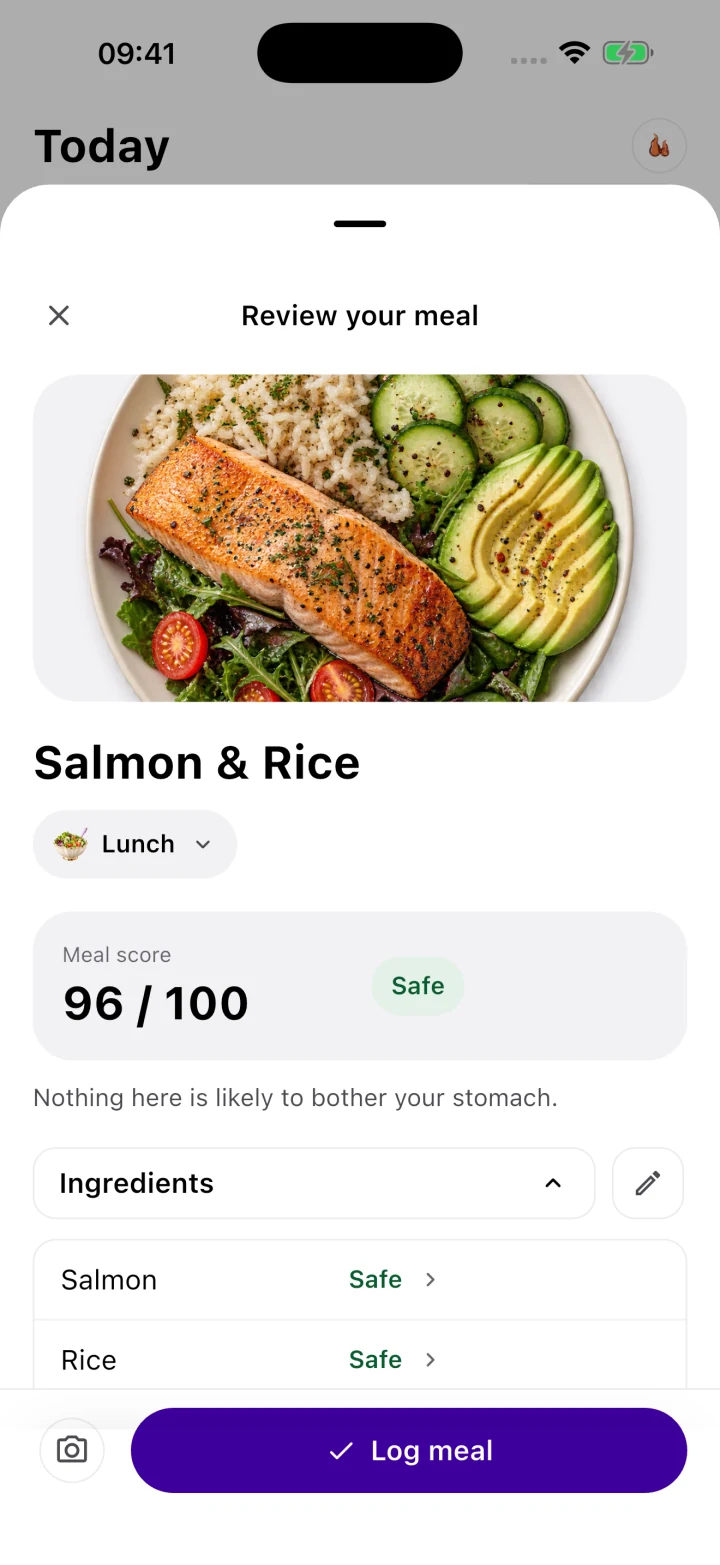
At Gutrack, we evaluate every food, beverage, and meal through our proprietary Gastric Safety Index (GSI)—an algorithmic 0 to 100 scoring model designed specifically for compromised upper GI tracts.
Unlike standard calorie trackers or generic FODMAP apps (which focus on lower intestinal fermentation in IBS rather than upper gastric chemical and mechanical stress), the GSI calculates a food's immediate impact on the stomach lining and lower esophageal sphincter based on six physiological vectors:
- Titratable Acidity & pH Thresholds: Does the item drop lumen pH below the 4.0 pepsin activation threshold or introduce un-ionized organic acids?
- Lipid-Mediated CCK Transit Delay: Does the fat concentration trigger cholecystokinin release that stalls gastric emptying and relaxes the LES?
- Proteolytic & Mechanical Abrasion Load: How much mechanical grinding (antral trituration) and acid-pepsin secretion is required to reduce the food to < 2mm particles?
- TRPV1 Nociceptive Stimulation: Does it contain capsaicinoids, piperine, gingerols, or volatile compounds that fire exposed pain receptors?
- Osmolarity & Distension Potential: Does high sugar, salt, or carbonation draw fluid into the lumen or distend the gastric fundus?
- Mucoprotective Colloidal Buffering: Does the food provide soluble beta-glucans, mucilages, or non-acidic amino acids that physically coat and buffer the epithelium?
In the GSI framework, scores are divided into three actionable clinical zones:
- Safe Zone (70–100): Gentle on the mucosal barrier, maintains pH stability above proteolytic thresholds, promotes steady gastric emptying, and supports epithelial restitution.
- Caution Zone (40–69): Acceptable only during late-stage consolidation/remission phases, in small portions, or when buffered inside a high-GSI meal.
- High Risk Zone (0–39): Directly caustic, highly acidic, mechanically abrasive, or triggers severe LES relaxation and delayed emptying. Strictly avoided during active flares.
Below is our comprehensive clinical comparison of popular "digestive health" morning tonics and their safe, mucoprotective replacements, ranked by their Gastric Safety Index (GSI) score.
| Beverage / Morning Tonic | GSI Score (0–100) | Clinical Zone | pH Range | Primary Physiological Mechanism in Gastritis & GERD |
|---|---|---|---|---|
| Undiluted Apple Cider Vinegar Shot (30 mL) | 4 / 100 | High Risk | 2.4 – 2.8 | Extreme titratable acetic acid load; causes immediate non-ionic back-diffusion across mucin-depleted epithelium, intracellular ion trapping, severe TRPV1 nociceptor firing, and instant esophageal pepsin reactivation (< pH 4.0). |
| Diluted ACV Tonic (1 tbsp in 8 oz warm water) | 12 / 100 | High Risk | 3.1 – 3.5 | Dilution barely raises pH because acetic acid is a buffered weak acid. Still sits well below the pH 4.0 pepsin activation threshold, erodes exposed lamina propria, and slows gastric emptying via duodenal secretin reflexes. |
| Warm Lemon Water (Juice of 1/2 lemon in 8 oz water) | 18 / 100 | High Risk | 2.6 – 3.2 | High concentration of citric acid ($\text{pK}_a$ 3.13); aggressively reactivates tissue-bound esophageal pepsin on contact and strips thinned surface mucin gels, despite internet claims of becoming "alkaline" after renal metabolism. |
| Raw Kombucha (Fermented Tea) | 22 / 100 | High Risk | 2.8 – 3.4 | Triple physiological insult: contains acetic and gluconic organic acids (pH ~3.0), dissolved carbon dioxide gas that distends the gastric fundus to trigger TLESRs, and trace ethanol/caffeine that reduce resting LES tone. |
| Concentrated Ginger & Cayenne Wellness Shot | 28 / 100 | High Risk | 3.5 – 4.2 | While gingerols can stimulate antral motility, concentrated gingerol, shogaol, and capsaicin act as direct agonists on exposed TRPV1 pain channels in eroded mucosa, triggering intense neurogenic burning and CGRP release. |
| Celery Juice (16 oz Cold-Pressed, Empty Stomach) | 48 / 100 | Caution | 5.7 – 6.0 | Non-acidic (safe from pepsin reactivation), but 16 oz of hyper-osmolar mineral juice on an empty stomach causes rapid volume distension of the gastric fundus and osmotic fluid shifts, provoking nausea or volume reflux in sensitive patients. |
| Weak Steeped Ginger Root Tea (2 slices fresh root, 8 oz water) | 64 / 100 | Caution | 6.2 – 6.6 | Mild prokinetic effect enhances antral contractions and accelerates gastric emptying without dropping intragastric pH; however, must be kept dilute to avoid irritating raw erosions during acute phase flares. |
| Alkaline Water (pH 8.8+) with 1/2 tsp Manuka Honey | 84 / 100 | Safe | 8.0 – 8.8 | Water at pH 8.8 irreversibly denatures and inactivates tissue-bound pepsin in the pharynx and esophagus; trace methylglyoxal in Manuka honey offers mild antimicrobial support against H. pylori when heavily diluted. |
| Warm Chamomile & Marshmallow Root Infusion | 92 / 100 | Safe | 6.5 – 7.0 | Completely neutral pH; marshmallow root (Althaea officinalis) provides aqueous polysaccharide mucilage that adheres to damaged foveolar epithelium as a synthetic mucus barrier, while chamazulene and apigenin downregulate local mucosal inflammation. |
| Soluble Oat Beta-Glucan Broth (Strained Rolled Oat Water) | 96 / 100 | Safe | 6.6 – 7.0 | The gold-standard morning mucosal buffer. Rich in soluble beta-glucan hydrocolloids that form a soothing physical film over gastric erosions, sequester free hydrogen ions and bile acids, and require minimal mechanical trituration. |
Deep Dive into Two Common Trap Beverages
Why the "Lemon Water Becomes Alkaline" Argument Fails the Stomach
Patients frequently ask: "I stopped drinking apple cider vinegar, and I switched to warm lemon water in the morning because my nutritionist told me lemon is alkaline-forming in the body. Why does my stomach still burn?"
This is a classic confusion between renal (kidney) acid-base balance and local luminal gastric pH. When you drink lemon juice (citric acid, pH 2.2), once it is absorbed through your small intestine and metabolized by your liver, the citric acid is oxidized into bicarbonate, leaving behind alkaline minerals (potassium, calcium, magnesium) that make your urine slightly more alkaline. This is measured by the Potential Renal Acid Load (PRAL) scale.
However, your esophagus and stomach lining do not care what happens in your kidneys three hours later. At the moment of contact, lemon water is an unbuffered citric acid solution with a pH between 2.6 and 3.2. As it travels down your esophagus and pools in your stomach, it reacts directly with your exposed mucosa, reactivates pepsin (< pH 4.0), and causes immediate chemical injury. For a gastritis patient, what matters is the contact pH and titratable acidity inside the upper GI lumen, not the systemic metabolic ash.
The Hidden Danger of ACV Gummies
In an attempt to bypass the throat burn of liquid vinegar, millions of consumers have turned to Apple Cider Vinegar Gummies. From a clinical nutrition perspective, these are often just as problematic for GERD and gastritis patients.
To give gummies their sharp, tangy flavor after processing, manufacturers load them with citric acid, malic acid, and tartaric acid, coated in glucose syrup and sucrose. When you chew an ACV gummy on an empty stomach, you are delivering a concentrated bolus of organic acids and simple sugars that stimulates rapid parietal cell acid secretion without any protein or soluble fiber to buffer the hydrogen ions.
Smarter Ways to Support Digestion Without Burning Your Mucosa
If you are experiencing post-meal heaviness, slow digestion, bloating, or reflux—the exact symptoms that drive people to try apple cider vinegar in the first place—how do you actually support your upper digestive tract without pouring acid onto an inflamed lining?
1. Why You Should Also Avoid "Betaine HCl with Pepsin" Challenges
Before discussing safe interventions, we must address the pharmaceutical-grade cousin of the ACV myth: the Betaine HCl Challenge.
In alternative wellness circles, patients are often instructed to take one capsule of Betaine Hydrochloric Acid (typically 500–650 mg, often formulated with pure porcine pepsin) before a meal, increasing the dose by one capsule every meal until they feel a "warm burning sensation" in their chest or stomach, and then backing down by one pill.
From a gastroenterological standpoint, this protocol is reckless. Feeling a "burn" from Betaine HCl does not prove you have found your "optimal acid dose"—it proves you have exceeded your mucosal bicarbonate buffering capacity and induced acute chemical nociception via TRPV1 receptors. Furthermore, swallowing exogenous porcine pepsin alongside hydrochloric acid when you have unhealed gastric erosions or silent reflux introduces the exact proteolytic enzyme responsible for ulceration directly into your stomach. Never take Betaine HCl if you have active gastritis, peptic ulcer history, or esophagitis.
2. How to Actually Test Stomach Acid Safely in a Clinical Setting
If you and your physician genuinely suspect true hypochlorhydria—for example, if you have persistent vitamin B12, iron, or calcium malabsorption alongside autoimmune thyroid disease (which frequently co-occurs with autoimmune atrophic gastritis)—do not use the at-home Baking Soda Burp Test.
The baking soda test (drinking 1/4 teaspoon of sodium bicarbonate in water and timing how long it takes to burp) is completely unvalidated. Whether you burp in two minutes or ten minutes depends on your gastric volume, how much air you swallowed while drinking, your pyloric emptying rate, and your visceral threshold for TLESRs—not your parietal cell mass.
Instead, ask your gastroenterologist for objective clinical diagnostics:
- Serum Biomarkers (The "Serological Biopsy"): Testing fasting blood levels of Serum Gastrin, Pepsinogen I, Pepsinogen II (and the PGI/PGII ratio), alongside Anti-Parietal Cell Antibodies (APCA) and Intrinsic Factor Antibodies. Low Pepsinogen I coupled with markedly elevated fasting Gastrin (in a patient not taking PPIs) strongly points toward corpus atrophy and true low acid.
- Upper Endoscopy (EGD) with Sydney Protocol Biopsies: Allows the endoscopist to visually inspect the gastric folds, sample the gastric fluid pH directly, and take tissue biopsies from the antrum, incisura, and corpus to check for H. pylori, oxyntic gland loss, or mucosal inflammation.
- Endoscopic Bravo pH Monitoring or 24-Hour pH-Impedance Testing: Measures exact esophageal and intragastric pH levels over 48 to 96 hours under real-world meal conditions.
3. Evidence-Based, Mucosal-Safe Digestive Support
When your stomach lining is healing from gastritis or GERD, you can optimize digestion, enzyme release, and gastric motility using physiological pathways that keep your intragastric pH safe:
- Stimulate the Cephalic Phase via Thorough Mastication (Mechanical Trituration): Digestion begins in the brain and mouth. When you eat quickly under stress, sympathetic ("fight or flight") tone constricts splanchnic blood flow to the stomach wall (weakening the mucosal barrier) and suppresses vagal coordination of the stomach. Furthermore, if you swallow food particles larger than 2 millimeters, the pyloric sphincter at the bottom of your stomach refuses to let them pass into the small intestine. Your stomach antrum has to grind those chunks against acid for an extra 60 to 90 minutes (antral trituration). Chewing every bite to a smooth puree (25–30 chews) reduces mechanical work on inflamed gastric folds by over 50% and triggers natural salivary amylase and lingual lipase without adding exogenous acid.
- Use Non-Acidic Prokinetic Support (Dilute Ginger Infusions or Artichoke Leaf Extract): If food feels like it sits in your stomach like a brick, the issue is almost always impaired gastric accommodation (the upper stomach failing to relax properly to hold a meal) or delayed antral motility—not a lack of acid. Clinical trials show that standardized extracts of Artichoke Leaf (Cynara scolymus) and mild, low-concentration Ginger Root (Zingiber officinale) stimulate migrating motor complexes (MMCs) and coordinate antral peristalsis, helping the stomach empty smoothly into the duodenum without altering intragastric pH.
- Deploy Mucoprotective Hydrocolloids Before Meals: Instead of an acidic "primer" before eating, use a mucosal shield. Drinking 4 to 6 ounces of warm water infused with Deglycyrrhizinated Licorice (DGL), **Slippery Elm bark (*Ulmus rubra
Self-tracking tool, not clinical diagnosis
Gutrack provides evidence-based Gastric Safety Index estimates for daily self-management and diet optimization. It does not replace medical consultation, endoscopy, or treatment prescribed by a qualified gastroenterologist.
Frequently asked questions
Does apple cider vinegar cure gastritis or make it worse?
Apple cider vinegar makes active gastritis significantly worse. Because its pH ranges between 2.5 and 3.0, drinking it floods the stomach with hydrogen ions, activating pepsin (which turns on below pH 4.0) and causing direct chemical burns to exposed lamina propria tissue. On the Gastric Safety Index, diluted apple cider vinegar scores an extremely hazardous 12 out of 100.
Why do wellness influencers claim ACV cures acid reflux?
The claim stems from a misunderstanding of the lower esophageal sphincter (LES), assuming the valve only closes when stomach pH drops below a certain threshold. In reality, GERD is primarily driven by transient lower esophageal sphincter relaxations (TLESRs) caused by gastric distension, high-fat cholecystokinin (CCK) delays, or hiatal hernias—none of which are corrected by drinking a weak organic acid.
What happens when you drink acetic acid with an inflamed stomach lining?
When acetic acid contacts an inflamed gastric lining with depleted mucin and bicarbonate buffers, weak un-ionized acid molecules diffuse directly across the lipid bilayers of surface epithelial cells. Once inside the neutral cell interior (pH 7.0), the acid dissociates, causing intracellular acidification, osmotic swelling, cellular rupture, and activation of TRPV1 pain receptors.
How can you actually test your stomach acid level safely?
The only accurate way to measure stomach acid is through clinical diagnostics such as a 24-hour esophageal pH-impedance study, an endoscopic Bravo pH capsule, or a SmartPill wireless motility capsule. At-home baking soda burp tests have zero clinical validity and merely measure gastric gas displacement rather than basal or stimulated parietal cell acid output.
Clinical Evidence & Scientific References
- Feldman M, Cryer B. Gastric acid secretion and mucosal barrier physiology. Sleisenger and Fordtran's Gastrointestinal and Liver Disease. 11th ed. Elsevier; 2021.
- Chung CH. Corrosive injury of the upper gastrointestinal tract after vinegar ingestion. Hong Kong Med J. 2002;8(5):365-366.
- Katz PO, Dunbar KB, Schnoll-Sussman FH, et al. ACG Clinical Guideline for the Diagnosis and Management of Gastroesophageal Reflux Disease. Am J Gastroenterol. 2022;117(1):27-56.
This article is for educational purposes only and isn't a substitute for professional medical advice, diagnosis, or treatment. Gutrack is a self-tracking tool, not a medical device. If you're experiencing persistent or concerning symptoms, talk to a doctor.