Gutrack
If you've ever had a burning feeling after eating and wondered whether it's your stomach or your throat acting up, you're not alone. Gastritis vs GERD symptoms get confused constantly, and it's easy to see why: both can cause a burning sensation, both flare up around meals, and both respond, at least partly, to some of the same foods. But they're different conditions, in different places, and telling them apart matters for how you treat them.
What Is Gastritis?
Gastritis is inflammation of the stomach lining. According to Cleveland Clinic, many people with gastritis have no symptoms at all, which is part of why it's often missed or misdiagnosed. When symptoms do show up, they typically include:
- A gnawing or burning ache in the upper belly, not the chest
- Pain that gets better or worse depending on whether your stomach is empty or full
- Feeling full quickly, or full longer than expected after a normal-sized meal
- Nausea, bloating, or burping
- Loss of appetite
Mayo Clinic and healthdirect both point to a few common causes: infection with H. pylori bacteria, regular use of NSAIDs like ibuprofen or aspirin, heavy alcohol use, and less commonly, autoimmune conditions or physical stress from illness. Acute gastritis can come on suddenly and settle within days; chronic gastritis lingers and usually needs medical treatment aimed at the underlying cause.
What Is GERD (Acid Reflux)?
GERD, or gastroesophageal reflux disease, is a different problem in a different location. It happens when the valve between your esophagus and stomach, the lower esophageal sphincter, doesn't close properly, letting stomach acid travel back up into the esophagus. Per Mayo Clinic, the telltale GERD symptoms include:
- Frequent heartburn: a burning feeling in the chest, often after eating or at night
- Regurgitation of food or sour liquid into the mouth
- Difficulty or pain swallowing
- A sensation of a lump in the throat
- Chronic cough, hoarseness, or wheezing, especially at night
Occasional acid reflux is common and not automatically GERD. It's generally considered GERD once reflux symptoms become frequent enough to interfere with daily life, rather than a once-in-a-while annoyance, though guidance varies on the exact frequency, so a doctor's assessment matters more than a fixed number. Left untreated, ongoing reflux can irritate the esophagus over time.
Gastritis vs GERD Symptoms: Key Differences
The overlap is real, but there are useful tells. Here's how gastritis symptoms and GERD symptoms tend to differ side by side:
| Symptom | Gastritis | GERD |
|---|---|---|
| Where it's felt | Upper stomach / upper abdomen | Chest and throat |
| Core sensation | Gnawing or burning ache, fullness | Burning heartburn, regurgitation |
| Timing with food | May worsen or ease depending on an empty vs. full stomach | Often worse after eating or lying down |
| Other clues | Nausea, bloating, early fullness | Sour taste, cough, hoarseness, lump-in-throat feeling |
| Underlying issue | Inflamed stomach lining | Acid escaping into the esophagus |
Heartburn vs Stomach Pain: Why the Confusion Happens
Heartburn vs stomach pain sounds like it should be simple to tell apart, but both gastritis and GERD can cause a burning feeling, and stomach acid is involved in both. The difference is largely about location and pattern: gastritis discomfort usually stays centered in the stomach itself, while GERD's burning classically climbs toward the chest and throat. Still, plenty of people describe their symptoms in ways that don't fit neatly into either box, which is exactly why self-diagnosing from a list rarely settles the question.
This is the real hook: two people with the "same" burning feeling can have entirely different conditions and entirely different food triggers. A generic symptom list tells you what's possible, not what's happening in your body specifically.
Can You Have Gastritis and GERD at the Same Time?
Yes. Gastritis and GERD are separate conditions, but they aren't mutually exclusive, and it's common for people to deal with both. They share several aggravating factors, including alcohol, NSAIDs, smoking, and certain foods, so someone with an irritated stomach lining may also be dealing with a reflux problem at the same time. If your symptoms don't cleanly match one pattern or the other, that's actually a fairly normal experience, and it's a good reason to get an evaluation rather than trying to self-sort it.
When to See a Doctor
Ordinary, mild symptoms of either condition are worth mentioning to a doctor if they stick around. NHS guidance suggests seeing a GP for indigestion-type symptoms that persist, and healthdirect recommends medical follow-up when gastritis symptoms aren't improving, are severe, or keep coming back.
Seek urgent or emergency care if you notice:
Vomit that contains blood or looks like coffee grounds; black, tarry stools or visible blood in stool; severe or persistent abdominal pain; difficulty swallowing or food feeling stuck; unexplained weight loss; or vomiting that won't let you keep any food down, along with feeling faint or dizzy.
One more note worth taking seriously: chest pain from GERD can feel similar to heart-related chest pain. If you have sudden, severe chest pain, especially with shortness of breath, sweating, or pain spreading to your arm or jaw, treat it as a medical emergency and get evaluated right away rather than assuming it's reflux.
Figuring Out Your Own Pattern
Once you and a doctor know which condition, or both, you're dealing with, the next question is usually: what sets it off for you? This is where general advice runs out of road. Trigger foods for gastritis and GERD vary a lot from person to person. Coffee bothers some people and not others; the same goes for citrus, tomatoes, spicy food, or fatty meals. Working that out by trial and error, remembering what you ate three days ago when a flare started, is slow and often stressful.
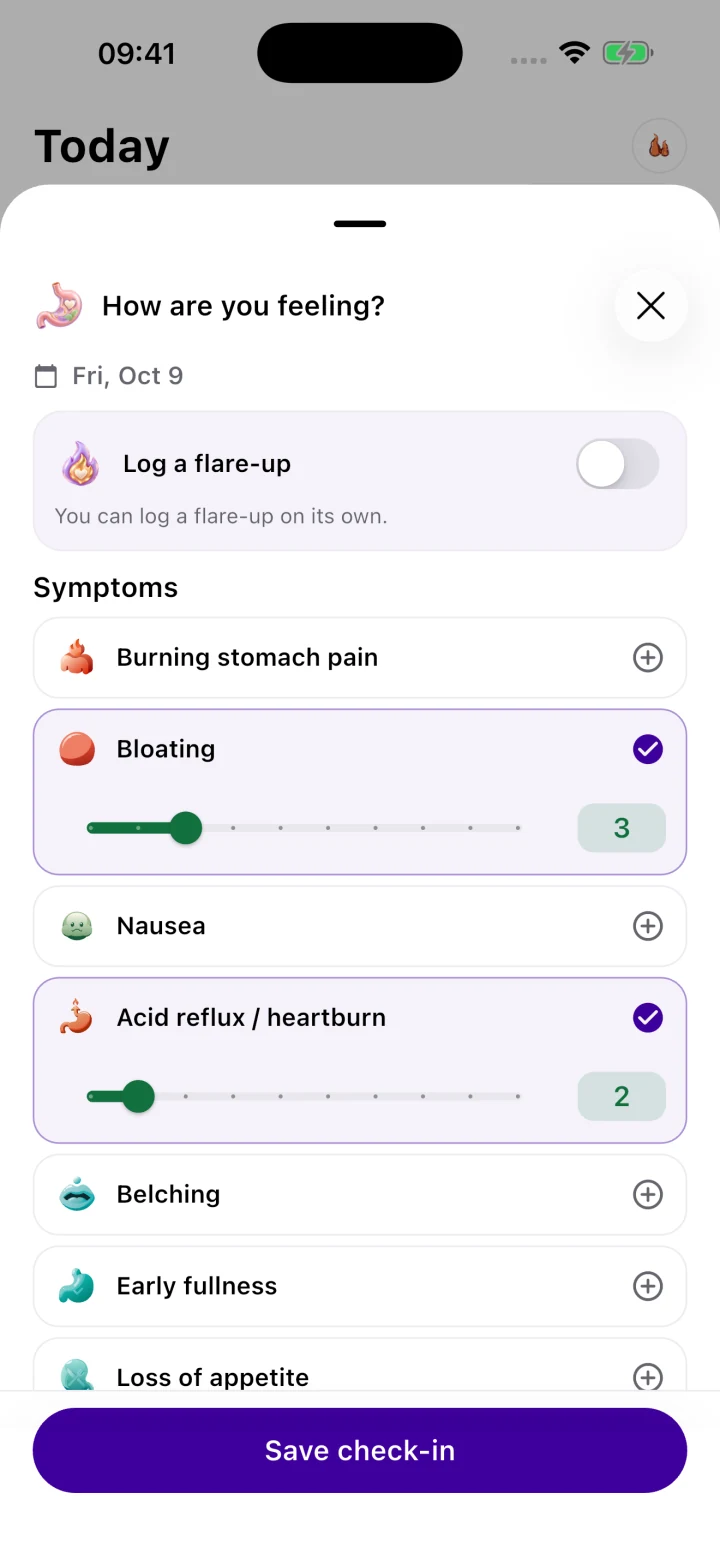
That's the specific gap Gutrack is built for. Instead of relying on memory or a generic "foods to avoid" list, you log what you eat and how you feel afterward, and over time your own trigger pattern becomes visible instead of guessed at.
Frequently Asked Questions
Can you have gastritis and GERD at the same time?
Yes. They're different conditions, gastritis affects the stomach lining while GERD involves acid reflux into the esophagus, but they share some triggers and commonly occur together.
Does gastritis cause heartburn?
Gastritis mainly causes upper stomach pain, fullness, and nausea rather than classic heartburn. Heartburn, a rising burning feeling in the chest, is more characteristic of GERD, though symptoms can overlap.
What's the main difference between gastritis and GERD symptoms?
Gastritis symptoms center on the stomach itself: burning or gnawing pain, early fullness, and nausea. GERD symptoms center on the chest and throat: heartburn, regurgitation, and sometimes a chronic cough or sour taste.
How do doctors tell gastritis and GERD apart?
Diagnosis usually starts with a symptom and history review, and may include an upper endoscopy to look at the stomach lining and esophagus directly, along with tests for H. pylori if gastritis is suspected.
Can diet trigger both gastritis and GERD?
Diet doesn't cause either condition on its own, but certain foods and drinks, like alcohol, fatty or spicy meals, and NSAIDs, can aggravate symptoms of both. Which specific foods matter varies by person, which is why tracking your own reactions is more useful than following a one-size-fits-all list.
This article is for educational purposes only and isn't a substitute for professional medical advice, diagnosis, or treatment. Gutrack is a self-tracking tool, not a medical device. If you're experiencing persistent or concerning symptoms, talk to a doctor.